
ISO 20022 Real-Time Payments: The New Global Standard for Institutional Liquidity
Master ISO 20022 Real-Time Payments. Learn how this XML standard reduces friction, enhances compliance, and reshapes global institutional liquidity by 2026.
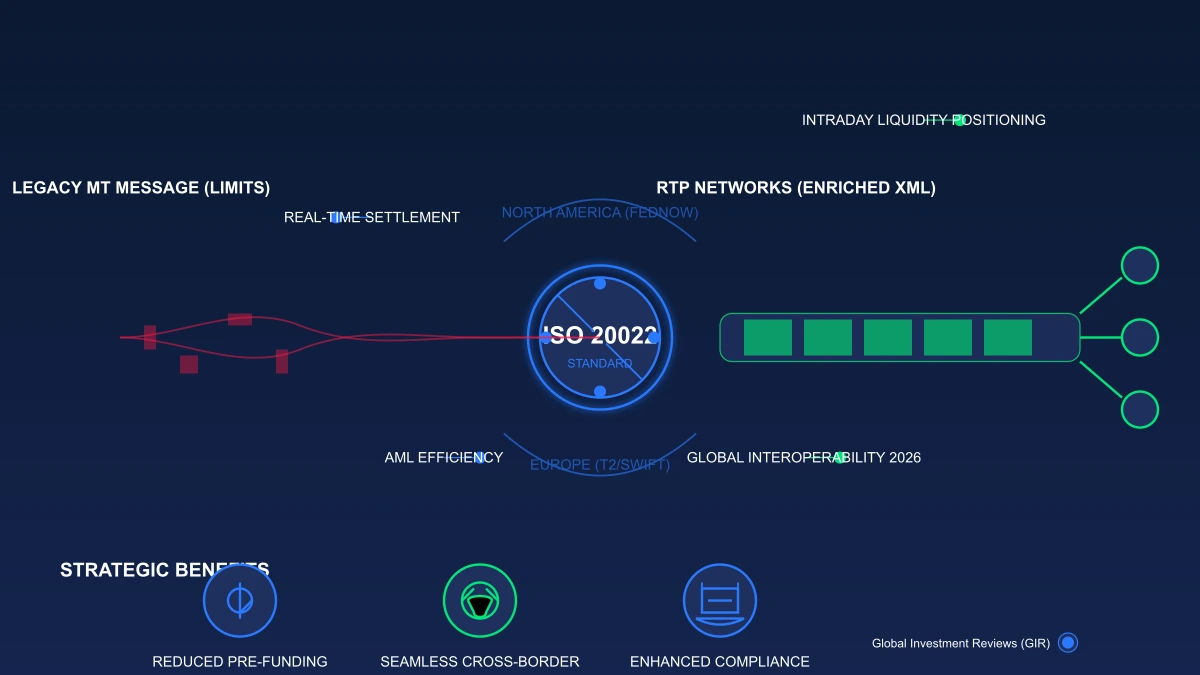
ISO 20022 provides a common structured financial-messaging standard, but it does not itself make all payment rails real-time or guarantee lower costs. The BIS CPMI’s updated harmonised data requirements, published in February 2026, allow flexibility for adoption through the end of 2027. Benefits depend on consistent implementation by payment-system operators and participants. BIS CPMI, February 2026.
The Technical Evolution: From Cryptic MT to XML Rich Data
The move away from legacy SWIFT MT (Message Type) formats marks the end of the "telex era." Traditional MT messages were structured as flat files with severe character limitations, often leading to truncated data and "broken" payment chains.
ISO 20022 utilizes an XML-based (Extensible Markup Language) format that is vastly superior. While an MT message might struggle to identify a basic address, an ISO 20022 message carries "rich data" blocks. This includes:
- Ultimate Debtor/Creditor Information: Precise identification that eliminates ambiguity.
- Structured Remittance Data: Full invoice numbers, tax IDs, and regulatory purpose codes.
- Purpose Codes: Automated categorizations that allow banks to understand why money is moving without manual intervention.
ISO 20022 supports richer, more structured payment data, which can improve reconciliation and compliance workflows; the standard alone does not establish a particular reduction in transfer costs. For consumer remittances, the World Bank tracks prices using a defined US$200 transfer benchmark, and reported costs vary by corridor and provider. Those consumer-remittance averages should not be applied to institutional payment flows. Source: World Bank, Remittance Prices Worldwide
Global Interoperability in 2026: The Interlinking of FedNow, T2, and CHIPS
The year 2026 stands as a critical milestone for ISO 20022 Real-Time Payments interoperability. We are witnessing a "convergence of giants." In the United States, the FedNow® Service and The Clearing House’s RTP® network are already leveraging this standard to provide 24/7/365 domestic settlement.
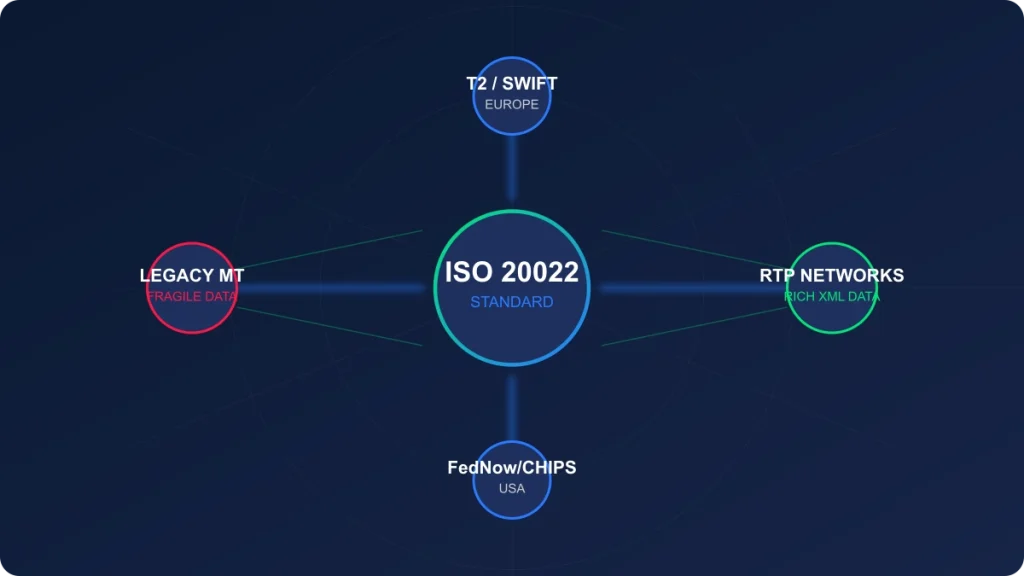
However, the real "force multiplier" is the alignment with Europe’s T2 (TARGET2) migration and the private sector CHIPS (Clearing House Interbank Payments System). By 2026, when the transition period for cross-border payments concludes, these systems will theoretically be able to "hand off" messages to one another without data loss. This "network of networks" approach aims to fulfill the G20’s roadmap for enhancing cross-border payments, targeting a world where a New York-to-London transfer settles with the same speed as a domestic Venmo transaction.
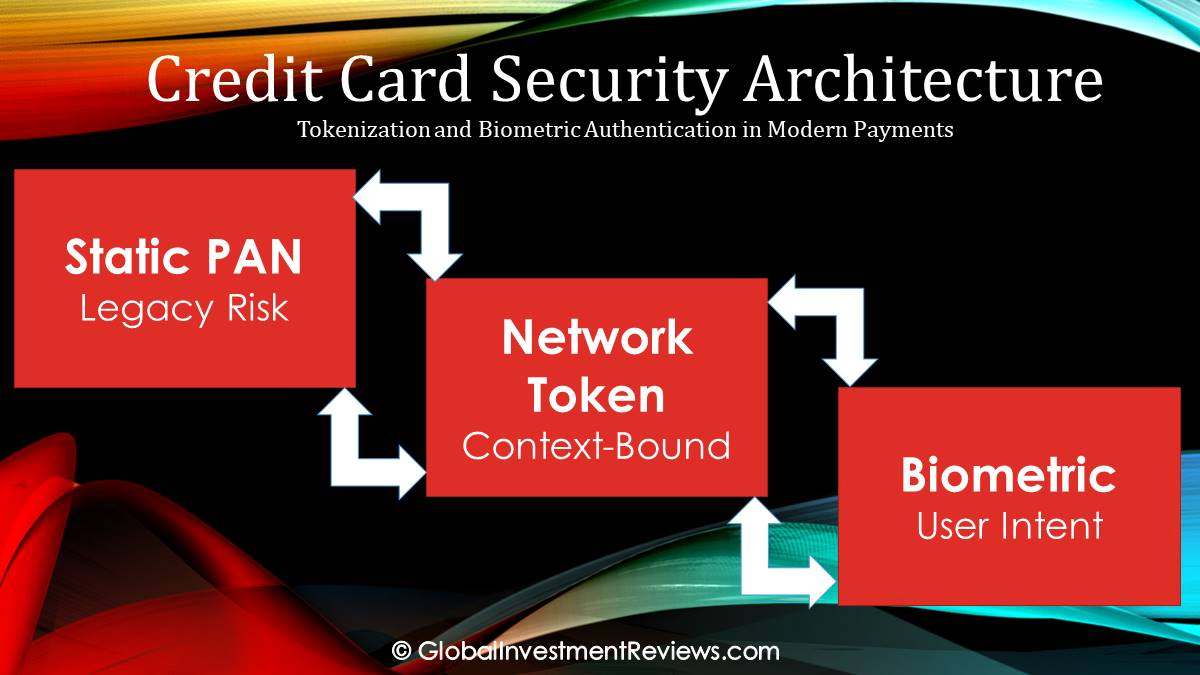
See More: Credit Card Security: Analyzing Tokenization and Biometric Authentication in Payments
Solving Cross-Border Friction: Reducing "False Positives"
Missing, inconsistent or unstructured payment data can lead to repair work, delayed processing or compliance review. A single global exception-rate percentage should not be used without a dated dataset that defines the payment rails, institutions and exception categories being measured.
Enhanced Compliance and AML Efficiency
ISO 20022 addresses the friction of ISO 20022 Real-Time Payments by providing structured fields for every party in the transaction.
- Eliminating Ambiguity: Structured addresses mean that a person named "John Smith" in London isn't accidentally flagged because of a sanctioned "John Smith" in a different jurisdiction.
- Automated KYC: Compliance engines can now parse structured XML data at wire speed. This reduces "false positives" in Anti-Money Laundering (AML) and Know Your Customer (KYC) screening, which SWIFT estimates can account for significant operational overhead in correspondent banking.
Strategic Benefits for Global Investors and Forex Markets
Why does this matter for the stock market, forex traders, and corporate treasurers? The implications are systemic.
- Intraday Liquidity Positioning: Treasurers no longer need to maintain massive "buffer" balances in various local currencies. Real-time visibility through
camt(Cash Management) messages allows for precise, just-in-time funding. - FX Transparency: Increased competition in the "hand-off" between RTP networks will likely compress FX spreads, as the speed of settlement reduces the duration of market risk for the liquidity provider.
- Equity Market Velocity: Faster settlement cycles (moving toward T+1 and eventually T+0) are supported by the underlying efficiency of the payment rails.
See More: Credit Card Churning: A Professional Analysis of Ethical, Legal, and Institutional Risks
As the world moves toward 24/7, instant, and data-rich payments, institutions that ignore the mandate for ISO 20022 risk falling behind in a competitive market. For those analyzing the bottom-line impact of these systemic changes, our financial analysis tools provide the necessary metrics to calculate how liquidity improvements translate into long-term growth.
The move to ISO 20022 is not just a regulatory hurdle—it is an opportunity to redefine institutional excellence.
FAQ: Navigating the ISO 20022 Transition
Q-1: What is the final ISO 20022 deadline for cross-border payments?
A: The coexistence period for SWIFT MT and ISO 20022 ends in November 2025. By this date, all financial institutions on the SWIFT network must be capable of receiving ISO 20022 messages.
Q-2: How do ISO 20022 Real-Time Payments affect corporate ERP systems?
A: Corporations must ensure their ERP and Treasury Management Systems (TMS) can digest XML formats. Those who fail to upgrade will face "data truncation" issues, where rich information sent by a partner is lost upon receipt.
Q-3: Does ISO 20022 replace SWIFT?
A: No. ISO 20022 is the language or standard, while SWIFT is the network that carries that language. SWIFT is actively leading the migration to ensure its network remains the dominant global carrier for this new data-rich format.
Operational controls and settlement risk
ISO 20022 standardises the structure and meaning of financial messages; adoption by itself does not make settlement instant or remove all correspondent-bank delays. Assess data mapping, exception handling, interoperability, fraud controls and the readiness of each participant in the payment chain.
Related Resources

Payments & Wallets
Real-Time Gross Settlement Liquidity Strategies
Master RTGS liquidity optimization to reduce intraday credit costs and manage payment settlement risks across modern digital banking infrastructures.

International Banking
Cross-Border Payments Infrastructure 2026
Analyze evolving cross-border payments infrastructure, correspondent banking shifts, and liquidity management strategies for global institutions.
Payments & Wallets
Credit Card Security: Analyzing Tokenization and Biometric Authentication in Payments
Explore how tokenization and biometric authentication enhance credit card security, reduce fraud, and protect digital payments across global financial systems.
The information provided is for educational and informational purposes only and does not constitute financial, investment, tax, or legal advice.