
Personal Finance · Credit Cards & Loans
Credit Card Churning: A Professional Analysis of Ethical, Legal, and Institutional Risks
Explore the credit card churning from a professional finance perspective. Understand the institutional risks, legal framework, and long-term impacts.
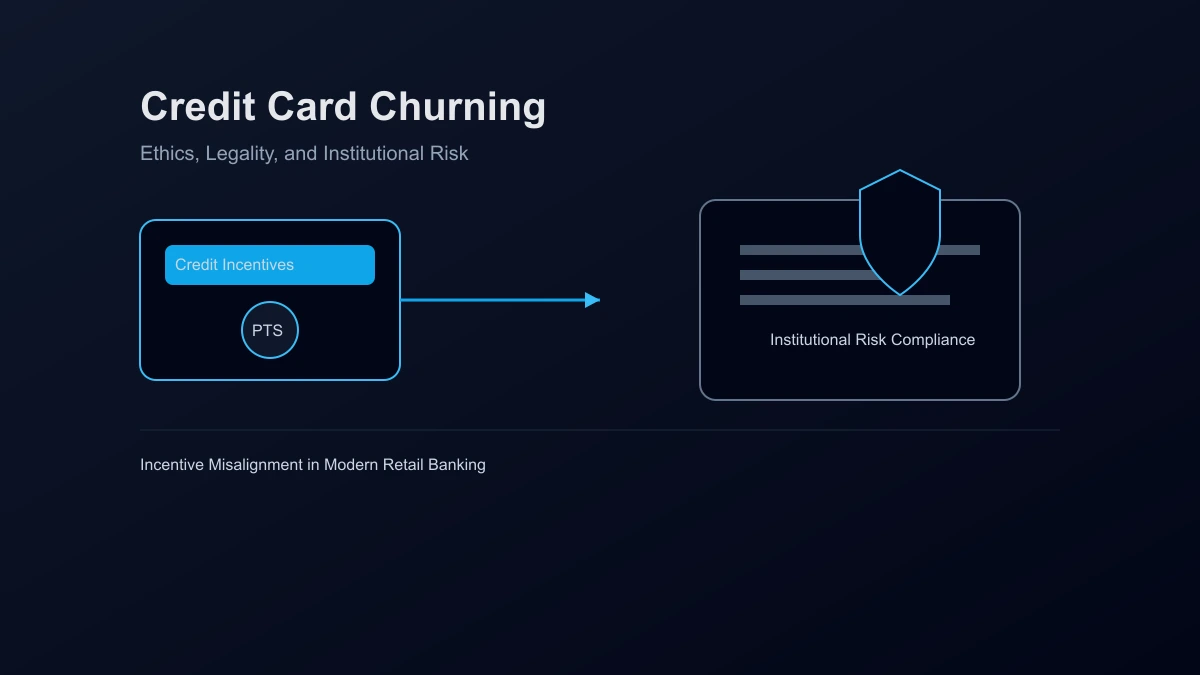
In the sophisticated world of retail banking, the term "credit card churning" has transitioned from a niche consumer hobby to a significant variable in institutional risk modeling. For financial analysts, compliance officers, and business leaders, the practice offers a fascinating—if often problematic—case study in incentive misalignment.
This article provides a rigorous examination of the practice, stripping away the promotional rhetoric to analyze the structural frictions between aggressive marketing acquisition and long-term portfolio sustainability.
1. Defining the Mechanics of Churning
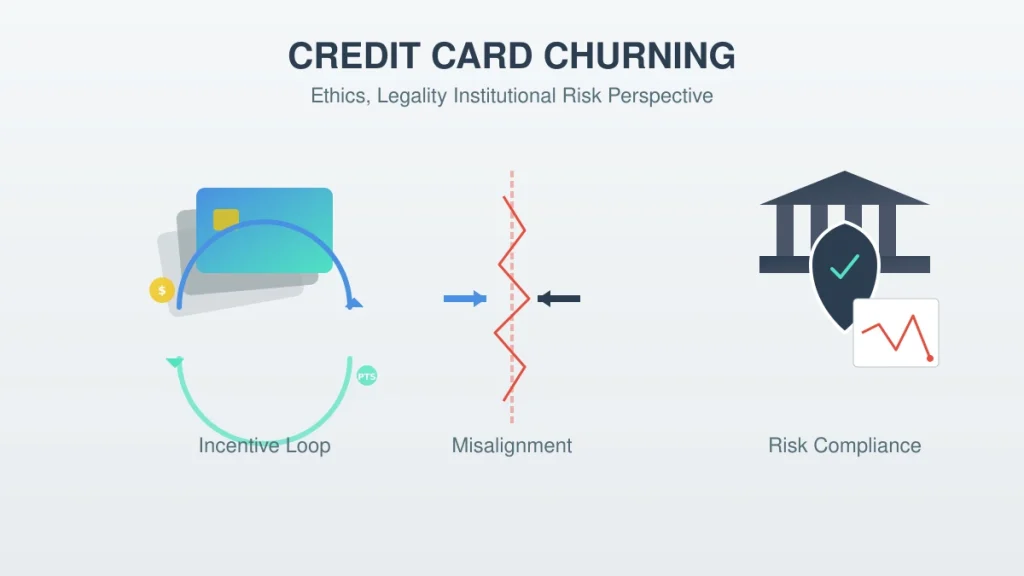
To analyze churning professionally, one must move beyond the colloquial. Within the industry, churning is defined as the high-velocity acquisition of credit lines with the primary intent of capturing non-organic promotional value, followed by the systematic abandonment of the account once those incentives are secured.
Read more: Mastering the Amex Ecosystem: Strategic Point Valuation for Business Owners
Distinguishing Intent: Optimization vs. Extraction
A critical distinction must be made between Organic Reward Optimization and Systematic Churning.
- Organic Optimization: Consumers align their standard, everyday spending with a card’s long-term value proposition (e.g., cashback on groceries or travel insurance). This results in a positive Lifetime Value (LTV) for the issuer.
- Systematic Churning: This involves "hit-and-run" tactics. The participant targets high-value sign-up bonuses (SUBs) and utilizes Manufactured Spending (MS)—the process of using credit to purchase liquid assets—to meet minimum spending requirements without increasing personal consumption.
| Feature | Organic Usage | Systematic Churning |
| Account lifecycle | Varies with normal customer behaviour | Varies by issuer terms, account history and strategy; no universal one-year cutoff |
| Spending Pattern | Consistent/Predictable | Spiked (Front-loaded) |
| Institutional ROI | Profitable via Interchange/Interest | Net Loss via Acquisition Cost |
2. The Legal and Regulatory Landscape
From a compliance perspective, the legality of churning is often misunderstood by the public. It is essential to differentiate between statutory violations and contractual breaches.
Statutory Legality (De Jure)
Under current frameworks such as the Fair Credit Reporting Act (FCRA) and the Equal Credit Opportunity Act (ECOA) in the United States, credit card churning is not illegal. A consumer possesses the legal right to apply for credit and terminate accounts at their discretion. Provided that the information supplied on the application (identity, income, and debt-to-income ratios) is factual, no criminal statute is violated.
Contractual Restriction (De Facto)
While the state may not prohibit churning, private financial institutions increasingly do. Most contemporary Cardholder Agreements now include "anti-gaming" or "abuse" clauses. These grant the issuer unilateral authority to:
- Withhold or "claw back" promotional rewards.
- Freeze accounts pending a manual review of spending patterns.
- Exercise Adverse Action by terminating the business relationship entirely.
3. Institutional Risk Management and "Bonus Abuse"
Financial institutions have evolved from passive observers to proactive defenders of their marketing budgets. Today, the "war on churning" is fought with machine learning and behavioral forensics.
Read more: Credit Card Security: Analyzing Tokenization and Biometric Authentication in Payments
Rewards Abuse Teams (RAT) and Behavioral Flagging
Major issuers now employ dedicated departments—Rewards Abuse Teams—that monitor for specific "red flag" behaviors:
- Threshold Spending: Spending exactly the amount required for a bonus and then immediately ceasing all transaction activity.
- Cycle Velocity: Opening and closing accounts within a 12-to-24-month window, known as "cycling."
- Low-Dwell Time: Closing an account immediately after the annual fee is assessed to avoid the cost of ownership.
Reputational Capital and "De-Risking"
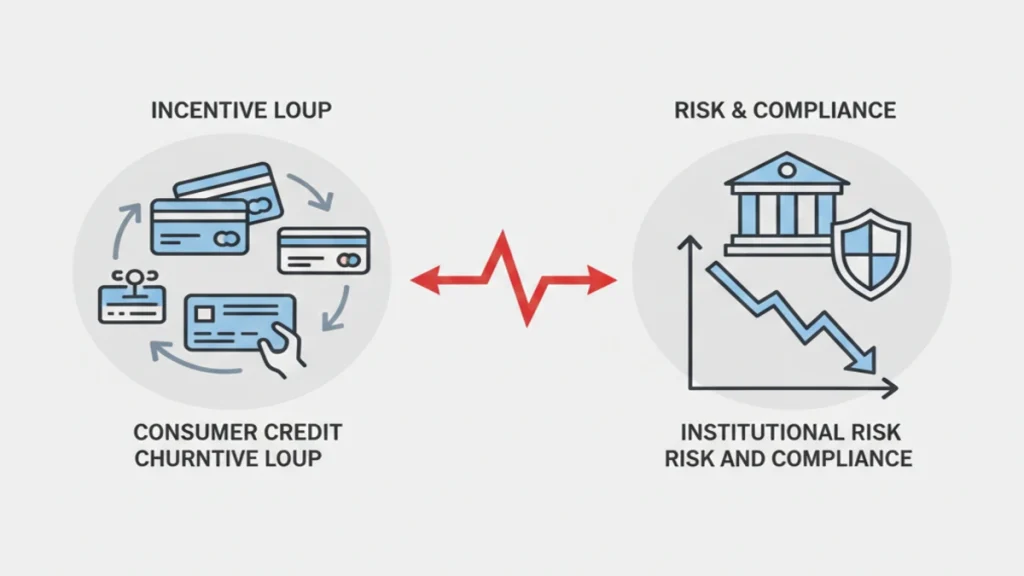
For the professional, the greatest risk of churning is not a temporary dip in a credit score, but the erosion of Reputational Capital. Institutions are increasingly using "global de-risking" strategies. A participant flagged for "gaming" a credit card bonus may find themselves "blacklisted" from that institution’s more critical services, such as commercial lending, mortgages, or private wealth management.
4. Ethical Considerations and Global Variations
The Ethics of Good Faith Participation
Ethically, churning challenges the doctrine of Good Faith. Financial products are priced and marketed under the assumption of mutual utility. Systematic extraction relies on information asymmetry—taking advantage of the bank's inability to verify long-term intent at the point of sale. This creates a "Tragedy of the Commons," where the costs of churning are socialized, leading to higher fees or lower reward rates for the general population.
Jurisdictional Nuance
The viability of churning varies globally based on Interchange Fee Regulations:
- United States: Interchange revenue is one component of card economics, but rates vary by card network, merchant category, transaction type and negotiated terms. Do not treat “2%+” as a universal rate or infer that interchange alone funds rewards or makes the US the global centre of churning.
- European Union: Regulation (EU) 2015/751 caps interchange fees for consumer debit cards at 0.2% and consumer credit cards at 0.3%, subject to the regulation’s scope and exceptions. These are EU legal caps; they should not be described as Australia-wide limits or as proof that rewards strategies have ended. EU interchange-fee regulation summary.
A risk-control checklist for rewards strategies
Before applying for another card, calculate the spending needed to earn a bonus and compare it with your normal budget. Include annual fees, interest if a balance is carried, foreign transaction fees, opportunity cost and the possibility that a provider may change its terms. Never manufacture spending or misrepresent eligibility. Read the card agreement and rewards-program rules, and consider how multiple applications may affect credit inquiries and future underwriting.
For business cards, keep personal and company expenses properly separated and follow accounting, reimbursement and employee-card policies. A rewards strategy is not worthwhile if it encourages unnecessary purchases, increases debt or creates recordkeeping problems.
Frequently asked questions
Is credit-card churning illegal?
Legality and contractual compliance depend on the conduct and jurisdiction. Fraud, false statements or misuse of accounts can create serious consequences; review the issuer's terms and applicable law rather than assuming every tactic is permitted.
Can repeated applications affect future borrowing?
They can affect credit files and lender assessments, but the impact depends on the jurisdiction, scoring model and applicant's overall profile. Consider upcoming mortgage or loan applications before changing strategy.
5. Conclusion
From a senior financial perspective, credit card churning is a testament to the unintended consequences of high-stakes marketing incentives. While it remains a legally permissible activity, its sustainability is in decline. As banking algorithms become more predictive and institutions prioritize "Total Relationship Value" over "New Account Growth," the window for successful systematic extraction is narrowing.
The professional consensus is clear: while short-term arbitrage may yield liquid gains, the long-term cost—measured in reputational risk and potential institutional exclusion—often outweighs the promotional benefit.
Source and Compliance Analysis
- Regulatory Basis: This analysis is grounded in the FCRA, ECOA, and EU IFR (2015/751).
- Institutional Framework: Based on standard Basel III operational risk principles and typical Tier-1 banking Terms of Service.
- Disclosure: This article is for educational purposes only and does not constitute financial, legal, or investment advice.
Review checklist
- Read the issuer’s current eligibility, bonus, account-closing and clawback terms before applying.
- Include annual fees, interest, hard inquiries, credit utilisation and the risk of missed payments in the net calculation.
- Keep applications accurate and follow issuer terms; do not manufacture spending or borrow at high cost to chase rewards.
Practical checks for the user or business
Welcome bonuses should be assessed after annual fees, minimum-spend rules, taxes and the value of rewards the cardholder can actually use. Carrying high-interest balances or spending more than planned to earn a bonus can overwhelm the advertised benefit and harm credit management.
Related Resources
Credit Card Payoff Calculator
Estimate how long it may take to pay off credit card debt, compare payment levels, and see estimated interest costs with an interactive payoff planner.
Payments & Wallets
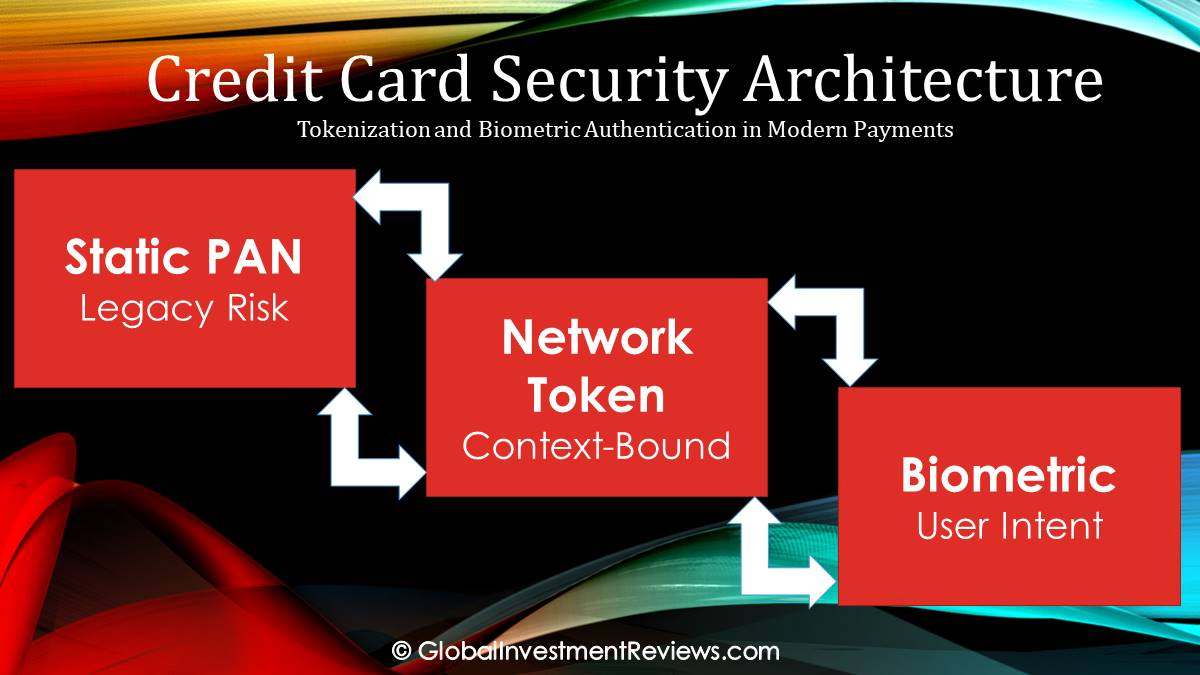
Credit Card Security: Analyzing Tokenization and Biometric Authentication in Payments
Explore how tokenization and biometric authentication enhance credit card security, reduce fraud, and protect digital payments across global financial systems.
Credit Cards & Loans
Best Credit Score and Monitoring Apps: How I Protect My Score & Identity in a Digital World
Compare the best credit score and monitoring apps. Track your score, get fraud alerts, monitor credit activity, and protect your identity.
The information provided is for educational and informational purposes only and does not constitute financial, investment, tax, or legal advice.