
Credit Card Security: Analyzing Tokenization and Biometric Authentication in Payments
Explore how tokenization and biometric authentication enhance credit card security, reduce fraud, and protect digital payments across global financial systems.
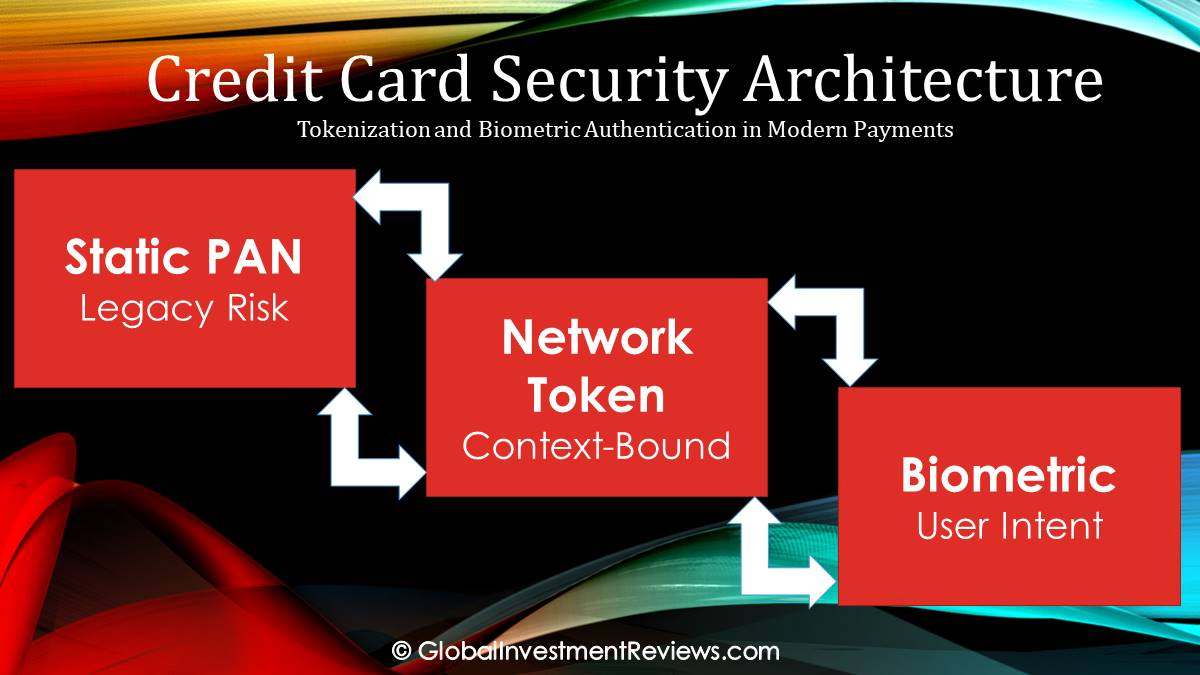
The Obsolescence of Static Identifiers in Global Finance
For decades, the global payments ecosystem functioned on a security model that utilized sensitive account data as both a routing instruction and a verification credential. This reliance on static, deterministic identifiers—specifically the Primary Account Number (PAN) and the Card Verification Value (CVV)—created a structural vulnerability. As the financial sector transitions into a digital-first environment, these legacy defenses have proven insufficient against the industrialization of cybercrime, necessitating a shift toward dynamic security architectures.
The Failure of Deterministic Data
Traditional payment security was designed for physical interactions where a card was presented in a controlled environment. However, as commerce migrated online, the immutability of the PAN became its greatest liability. Unlike a password, which can be changed instantly, a 16-digit PAN is tied to a physical card and a specific account ledger. When these numbers are stored in merchant databases, they represent high-value, evergreen targets for data exfiltration.
The industry’s first major response, the EMV (Europay, Mastercard, and Visa) chip standard, successfully reduced physical card cloning by introducing a dynamic cryptogram for face-to-face transactions. Nevertheless, this hardening of the physical Point of Sale (POS) caused a "waterbed effect," where fraud migrated to Card Not Present (CNP) channels. In the CNP environment, the security of the transaction remained dependent on static data, leaving e-commerce transactions exposed to database breaches and credential stuffing.
Read more: Credit Card Churning: A Professional Analysis of Ethical, Legal, and Institutional Risks
The Shift Toward Decoupled Credentials
The launch of mobile payment ecosystems, such as Apple Pay and Google Pay, introduced a fundamental decoupling of the payment instrument from the transaction. By utilizing Near Field Communication (NFC) and Secure Elements (SE) within mobile hardware, banks began to move away from the transmission of the actual PAN. This transition was driven not only by a desire for consumer convenience but by the unsustainable operational costs associated with "breach-and-reissue" cycles. For institutional stakeholders, the priority shifted from defending a static number to ensuring the payment credential was both temporary and uniquely bound to the user.
Technical Architecture—Surrogate Credentials vs. Identity Verification
Modern payment security is defined by two complementary pillars: protecting the transaction data and verifying the user’s intent. These are realized through Network Tokenization and Biometric Authentication.
The Mechanics of Network Tokenization
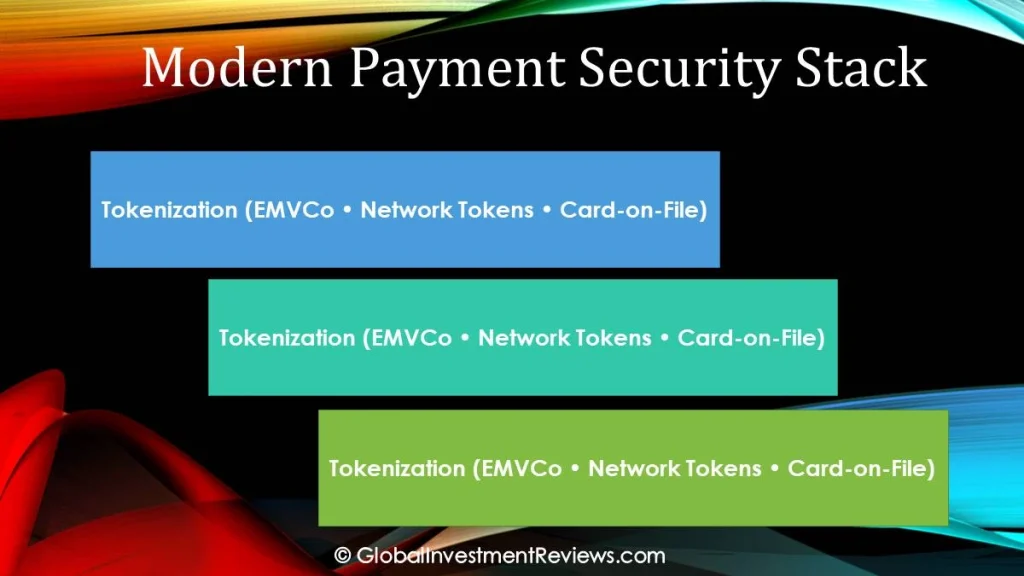
Under EMVCo standards, major networks utilize platforms like the Visa Token Service (VTS) and the Mastercard Digital Enablement Service (MDES) to manage the lifecycle of a token. In this model, the 16-digit PAN is replaced by a mathematically unrelated surrogate—a token—which is restricted in its use.
- Device-Based Tokens (DPAN): These are provisioned to a device’s hardware-level Secure Element (SE) or Trusted Execution Environment (TEE). These tokens are bound to a specific device ID; if intercepted, they cannot be successfully utilized on any other hardware.
- Network-Based Tokens (Card-on-File): For e-commerce, tokens replace stored card data in merchant vaults. Because these tokens are restricted to a specific merchant, a data breach at one retailer does not compromise the consumer’s ability to transact elsewhere.
Biometric Authentication and the FIDO2 Standard
While tokenization devalues the data, biometrics verify the access. Modern systems have shifted from simple physical matching to multi-factor cryptographic verification.
- Physical Biometrics: Systems like FaceID or fingerprint sensors utilize asymmetric cryptography. The biometric template remains on the device; a successful match triggers a private key signature that authorizes the release of the payment token.
- Behavioral Biometrics: This layer analyzes passive signals—such as keystroke rhythm, swipe velocity, and device orientation. According to industry observations, these signals provide a continuous verification layer that helps detect Account Takeover (ATO) even when legitimate credentials are used.
Jurisdictional Analysis and Global Regulatory Frameworks
The adoption of these technologies is moderated by regional regulatory mandates and consumer behavior. As of 2026, the global map reveals distinct clusters of implementation.
North America and Atlantic Financial Hubs
In the United States and Canada, the FFIEC has emphasized the move away from SMS-based multi-factor authentication (MFA) toward hardware-backed biometrics. In the Cayman Islands and Bermuda, the high density of institutional assets has led to an early adoption of PCI DSS v4.0 standards, making tokenization a prerequisite for risk management.
- Case Study: The OMNY (New York) and UP Express (Toronto) transit systems demonstrate the efficiency of device-bound tokens, where the biometric "unlock" serves as the primary authorization for millions of daily commuters.
The EEA, Switzerland, and the UK
Europe operates under the world’s most stringent authentication requirements. The transition to PSD3 has reinforced the necessity of Strong Customer Authentication (SCA).
- Market Drivers: In the Nordics (Sweden, Norway, Denmark, Finland) and Iceland, national digital identity frameworks (e.g., BankID) are integrated with payment biometrics. In Germany and Austria, the digitization of the "Girocard" has moved a historically cash-based society toward tokenized wallets.
- Financial Centers: In Luxembourg, Ireland, Belgium, Malta, and Cyprus, tokenization is the foundational layer for cross-border clearing. High-wealth jurisdictions like Monaco and Switzerland utilize biometric-first banking apps as the primary defense for private banking transactions. In the UK, France, Netherlands, Italy, and Spain, retail biometrics are increasingly common in large-scale merchant environments.
Middle East and Asia-Pacific
The GCC region—specifically the UAE, Saudi Arabia, Qatar, and Kuwait—has seen rapid growth in biometric payments, supported by central bank initiatives like Saudi Vision 2030. Israel remains a significant exporter of the behavioral biometric technologies that underpin global banking apps.
In APAC, Singapore (MAS) and Hong Kong (HKMA) have utilized regulatory sandboxes to integrate tokenization into broader digital asset frameworks. Australia and New Zealand lead in contactless penetration, while Japan, South Korea, Taiwan, and Hong Kong have successfully migrated complex legacy transit systems into the FeliCa and Samsung Pay tokenized environments.
Read more: Mastering the Amex Ecosystem: Strategic Point Valuation for Business Owners
Global Investment Reviews – Strategic Perspective
From a research perspective, the convergence of tokenization and biometrics represents the most significant shift in payment integrity since the introduction of the magnetic stripe.
- The Foundation of Tokenization: Tokenization will remain the foundational security pillar because it addresses the core incentive of cybercrime: the value of the data. By replacing a universal identifier with a context-specific surrogate, the industry effectively devalues the results of a database breach.
- The Biometric Evolution: While physical biometrics are highly effective, the industry is moving toward Passive/Behavioral Biometrics to reduce friction. However, institutional stakeholders must remain cognizant of the threat posed by AI-driven deepfakes, which may require the integration of "liveness detection" and network-level AI fraud analysis.
- Risk Mitigation: A critical strategic risk remains "Hardware Lock-in." As financial institutions rely more heavily on device-based biometrics, the control over the customer authentication experience shifts toward smartphone manufacturers. A diversified, multi-layered security stack is essential to maintain institutional autonomy.
Disclaimer
This article is for educational and informational purposes only. It does not constitute financial, legal, or cybersecurity advice. Payment security technologies, regulatory requirements, and implementation standards may vary by jurisdiction, institution, and service provider. Readers should consult qualified professionals or official regulatory guidance before making security or infrastructure decisions.
What consumers and merchants should verify
Tokenization and biometrics address different parts of payment security. A token can reduce the exposure of a primary card number during a transaction, while a biometric check helps verify a user on a device; neither removes every fraud pathway. Review device lock settings, account recovery methods, transaction alerts, merchant controls and the process for reporting unauthorized payments. Merchants should test fallback flows, device changes, accessibility and dispute handling instead of treating biometric authentication as a complete fraud strategy.
When assessing a payment provider, ask how credentials are stored, how tokens are provisioned and revoked, what logs are available, and how incidents are escalated. Avoid claiming that any single technology makes a payment system “fraud-proof.”
Frequently asked questions
Does tokenization mean card data can never be stolen?
No. It can reduce exposure of the underlying card number, but compromised devices, accounts, merchant systems and social-engineering attacks remain possible.
Are biometrics enough to secure a payment account?
No single control is sufficient. Combine device security, strong account recovery, alerts, monitoring and a clear response process.
Practical checks for the user or business
Tokenization can reduce exposure of the underlying card number, while biometrics help confirm a user on a device; neither eliminates every fraud path. The issuer’s fallback process, device-loss recovery, merchant implementation and dispute rights remain important parts of the control system.
EMVCo describes payment tokenisation within the card ecosystem; tokenisation and biometrics address different layers of payment security and should not be treated as interchangeable controls. Read the source material: EMVCo payment tokenisation.
Related Resources

Credit Card Payoff Calculator
Estimate how long it may take to pay off credit card debt, compare payment levels, and see estimated interest costs with an interactive payoff planner.
Credit Cards & Loans
Credit Card Churning: A Professional Analysis of Ethical, Legal, and Institutional Risks
Explore the credit card churning from a professional finance perspective. Understand the institutional risks, legal framework, and long-term impacts.
Payments & Wallets
ISO 20022 Real-Time Payments: The New Global Standard for Institutional Liquidity
Master ISO 20022 Real-Time Payments. Learn how this XML standard reduces friction, enhances compliance, and reshapes global institutional liquidity by 2026.
The information provided is for educational and informational purposes only and does not constitute financial, investment, tax, or legal advice.