Global Mobility · Global Horizons · Asian Dynamics
The Great Asian Rotation: Why Western Investors are Betting on Japan's Stability vs. South Korea’s AI Tech Growth
Compare Japan's structural stability with South Korea's tech-driven growth, with insights for Western investors building international portfolios.
Executive Summary & Key Takeaways
(An Exclusive Analysis by Global Investment Reviews Strategy Team)
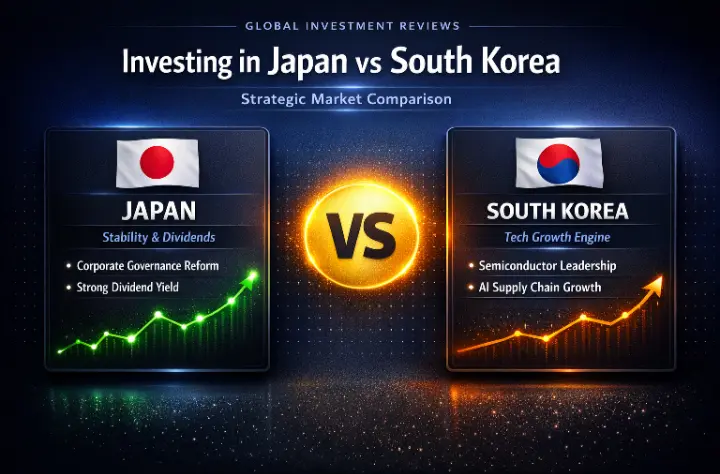
- The Structural Shift: Western capital is rotating from China toward Japan and South Korea due to transparency and high-tech alignment.
- Japan’s Value Re-rating: Corporate governance reforms (TSE mandates) are turning Japan into a top-tier destination for dividends and buybacks.
- Korea’s AI Dominance: South Korea remains the global bottleneck for AI memory chips (HBM), making it a high-growth tech play.
- Portfolio Strategy: A “Barbell Strategy” balancing Japan’s stability with Korea’s high-beta growth is the optimal approach for long-term success.
The global investment landscape is undergoing a profound structural transformation. As geopolitical shifts and evolving regulatory environments prompt a strategic reallocation of capital away from traditional emerging hubs, institutional and retail investors across the USA, Canada, Europe, and Australia are looking toward established Asian democracies for long-term Alpha. The core debate for modern portfolios has now shifted toward a critical comparison: Investing in Japan vs South Korea.
At Global Investment Reviews, we have observed that this is not merely a temporary trend but a fundamental “rotation” of Western capital. Japan, once viewed through the lens of stagnation, has reinvented itself through aggressive corporate governance reforms, offering a level of stability that rivals Western markets. Conversely, South Korea is positioning itself as the indispensable engine of the global AI revolution.
The Structural Shift: Beyond the Surface
To truly grasp the value proposition, one must look at the structural moats protecting these two economies.
1. Japan’s Governance Revolution: The Stability Play
The Tokyo Stock Exchange (TSE) has spearheaded a mandatory reform movement that is permanently changing the corporate landscape. Companies trading below book value are now under immense pressure to improve Return on Equity (ROE) or face delisting. This has led to record-breaking share buybacks and dividend hikes, making Japan a safe-haven anchor.
Source: Tokyo Stock Exchange / Bloomberg Analysis
2. South Korea’s Innovation Engine: The High-Growth Play
South Korea is the undisputed backbone of the AI era. Companies like Samsung and SK Hynix control a massive share of the global High-Bandwidth Memory (HBM) market. Unlike traditional manufacturing, Korean firms are now deeply integrated with Western tech giants as strategic partners in the AI revolution.
Source: Reuters / Financial Times Tech Reports
Comparative Snapshot: Japan vs. South Korea
| Investment Metric | Japan (Stability) | South Korea (Growth) |
|---|---|---|
| Primary Attraction | Governance & Dividends | AI & Semiconductor Moats |
| Market valuation | Compare current index-level valuation using a dated source and consistent methodology | Compare current index-level valuation using the same date, earnings basis and index coverage |
| Shareholder Focus | High (Aggressive Buybacks) | Emerging (Value-up Initiatives) |
| Risk Profile | Low Volatility | High Beta / Tech-Sensitive |
Expert Commentary: The Strategic Pivot
“The current shift we are seeing in Asian equity markets is not a flash in the pan. It is a fundamental recalibration of how Western capital perceives risk in the East. While Japan offers a masterclass in corporate ‘cleanup’ and shareholder value, South Korea is building the literal foundations of the AI era. For a balanced global portfolio, these two markets are no longer optional—they are essential pillars.”
— Raihan Ferdous
Senior Investment Strategist, Global Investment Reviews
Strategic Verdict: How to Allocate?
At Global Investment Reviews, we believe the choice between Investing in Japan vs South Korea should be based on your specific risk-return profile. The “Exit China” strategy of global asset managers is providing a permanent tailwind for these two markets.
Final Guidance: Investors seeking defensive yield should overweight Japan, while those looking to capture the explosive upside of the next tech super-cycle should prioritize South Korea. Both nations have moved from the periphery to the core of institutional Western portfolios.
Source: IMF / OECD Economic Outlook
Disclaimer: This analysis is for informational purposes only and does not constitute financial advice. Always consult with a certified professional before making investment decisions. Visit Global Investment Reviews for more deep-dive market insights.
Country and market due diligence
A Japan–South Korea comparison needs to look below broad narratives about stability or technology. Sector weights, individual-company concentration, currency, valuation, governance and earnings cyclicality can explain more of the investment risk than the country label alone.
Related Resources
Asian Dynamics
Invest in Japan 2026: Institutional Strategy
Explore the institutional thesis to invest in japan. Discover macro trends, corporate governance reforms, and prime real estate opportunities.
Asian Dynamics
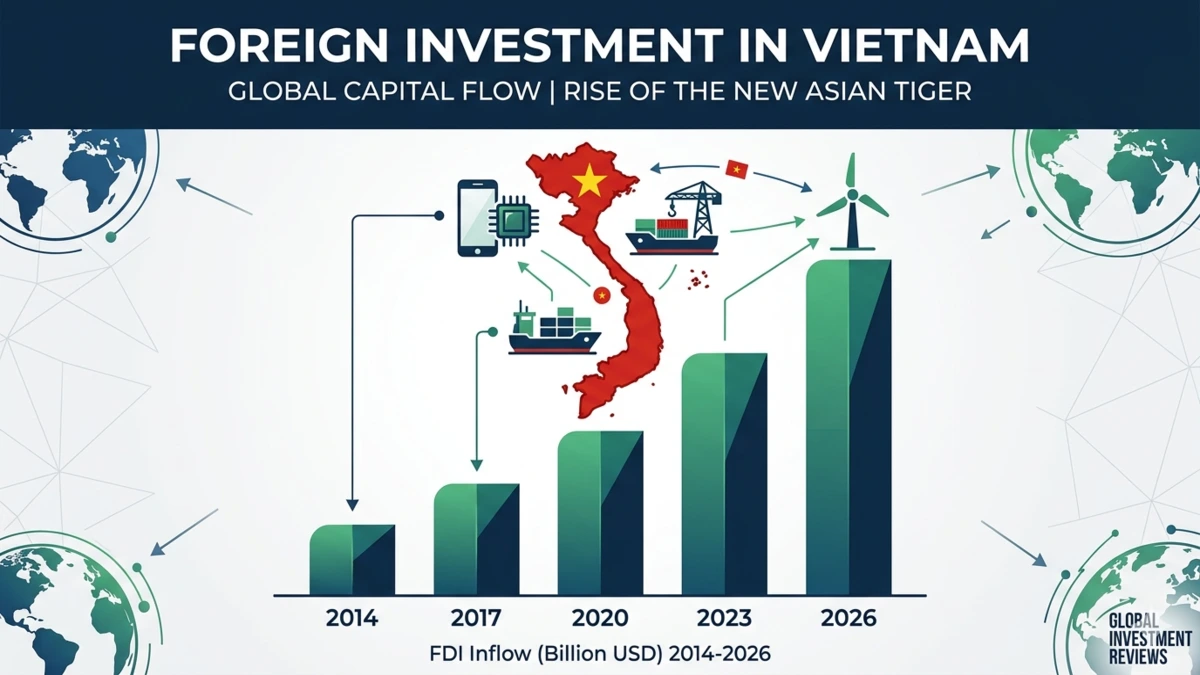
Foreign Investment in Vietnam: A Strategic Analysis of the Last Decade (2014-2026)
How foreign investment in Vietnam evolved from 2014 to 2026: key FDI trends, major sectors and data-driven insights for global investors.
Asian Dynamics
The Ultimate Investment in Singapore Guide: 10-Year Trends & Strategies for High Returns
Discover the Investment in Singapore Guide by Global Investment Reviews. Explore officially reported FDI data, tax-free growth, and residency through investment.
The information provided is for educational and informational purposes only and does not constitute financial, investment, tax, or legal advice.