Commodities
Master the global commodities market with GIR. Get expert analysis on Gold, Oil, and Metals. Learn to hedge inflation and grow your wealth. Start trading today!
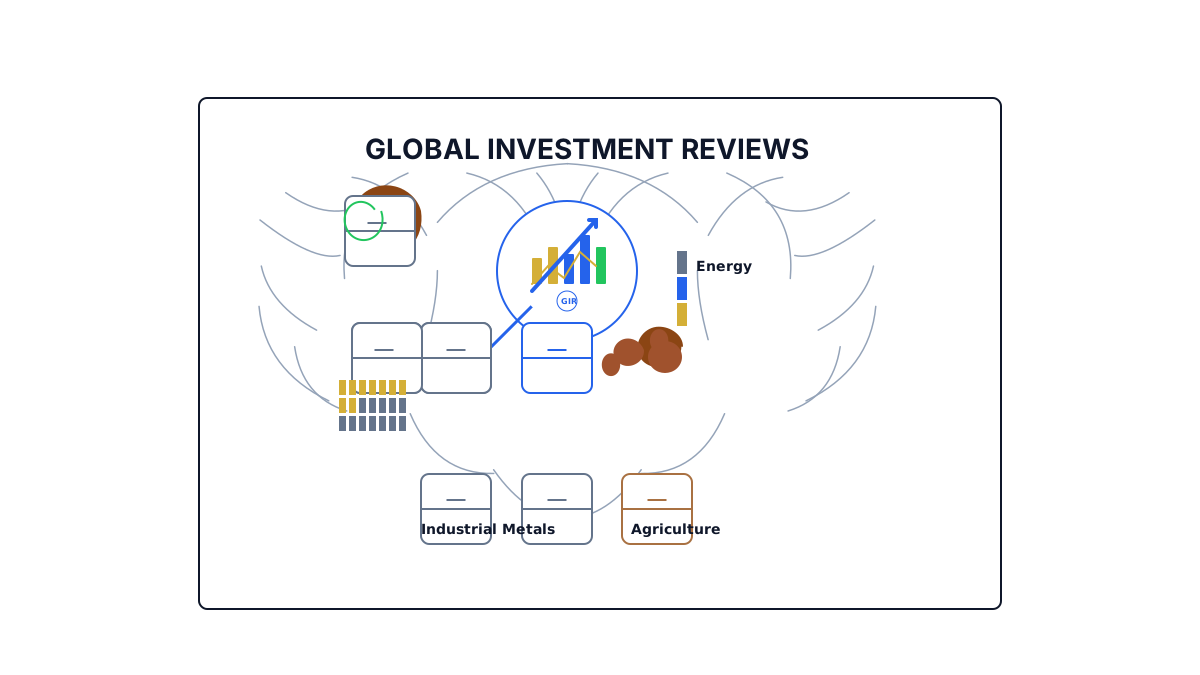
Global Commodities Portal
Real-time prices of Metals, Energy, and Agriculture. Click for analysis.
Elevate Your Analysis with TradingView
Join 50 million+ traders worldwide. Get real-time commodity data, advanced charting tools, and social insights to make smarter decisions.
Transparency Note: We are proud to be an official TradingView partner. If you choose to upgrade to a paid plan using our link, you may receive a $15 bonus credit, and we may receive a small commission. This helps Global Investment Reviews maintain high-quality independent research.
The Pulse of the Earth: A Strategic Guide to Commodity Investing
Moving beyond digital numbers to understand the physical forces that drive the global economy. From the depths of mines to the vastness of farmland, commodities represent the true reality of human demand.
1. Why Commodities Are the "Honest" Markets
In a world dominated by algorithms, high-frequency trading, and central bank interventions, the commodities market remains one of the few places where the laws of physics still apply. You cannot "print" a barrel of oil, and you cannot "digitally manufacture" an ounce of gold. This physical scarcity is exactly what makes commodities the bedrock of a sophisticated investment portfolio.
Think of the stock market as a popularity contest where prices are driven by dreams of future growth. In contrast, the commodities market is a weight-counting contest. It reflects what people need now. If a city is being built, Copper is consumed. If people are traveling, Jet Fuel is burned. If the population grows, Wheat is eaten.
At Global Investment Reviews (GIR), we view commodities as the "Whispers of the Market." They often tell the truth about the global economy long before the news headlines or government reports catch up.
2. The Core Sectors You Must Watch
Precious Metals
Gold and Silver aren't just jewelry; they are "Crisis Insurance." When the value of paper currency is eroded by inflation, investors flock to these finite metals to preserve their purchasing power.
Energy Complex
Crude Oil and Natural Gas are the global lifeblood. Their prices are dictated by OPEC+ decisions, weather patterns, and the transition toward cleaner energy sources.
Industrial Metals
Copper, Aluminum, and Lithium are the DNA of modern infrastructure. "Dr. Copper" in particular is a leading indicator for global manufacturing and EV expansion.
Agriculture (Softs)
Wheat, Corn, and Coffee are essentials. These markets are driven by unpredictable weather patterns, global population growth, and fertilizer supply chains.
3. Understanding the "Super-Cycle"
Commodities don't move in the same way stocks do. They operate in Super-Cycles—long periods (often 10-15 years) where prices stay structurally high or low. Unlike a tech company that can scale its software overnight, it takes a decade to build a new copper mine or a major oil refinery. This "Lag Time" is what creates massive price swings.
We are currently witnessing a shift where the world is moving from "Digital Assets" back to "Tangible Assets." As nations invest in renewable energy grids, the demand for silver and copper is hitting levels never seen before. This structural shift is the definition of a new Super-Cycle.
4. Real-World Example: The "Melting Ice Cube" Strategy
Imagine it is 1970. You have $35 USD. You could either keep that cash in your wallet or buy one ounce of gold. Fast forward to today: that same $35 in cash wouldn't even buy you a decent dinner for two in a major city. However, that one ounce of gold is now worth over $2,300.
Why does this happen? Because paper money is like a melting ice cube—its purchasing power slowly drips away due to inflation. Commodities, on the other hand, are the glass that holds the water. They don't melt. This is why institutional investors use commodities to "hedge" their portfolios against the devaluation of the dollar.
Example 2: In 2020, during the global lockdown, Oil prices briefly went negative. Many thought oil was "dead." However, at GIR, we analyzed the supply-side destruction—rigs were being shut down. We knew that once demand returned, there wouldn't be enough supply to meet it. The result? A massive rally that caught the mainstream media by surprise.
5. The Mental Game: Avoid the "Herd"
Commodity markets are driven by two extreme emotions: Greed and Fear. When a commodity like Gold is hitting all-time highs and your neighbor is talking about it, that is often the time to be cautious. Conversely, when a commodity like Wheat is "boring" and unloved, that is often where the real opportunity lies.
To be a successful commodity investor, you must think like a contrarian. You must look for the "Bottlenecks"—where is the world running out of something? Whether it's a drought affecting Coffee crops or a strike in a Chilean copper mine, these physical bottlenecks are the true signals for profit.
Commodity Masterclass: FAQ
Related Resources
Commodities Analysis
Master the real economy with professional Commodities Analysis. Get live charts, inflation data & geopolitical research at GIR Finance. Analyze Gold & Oil today!
About Global Investment Reviews
Global Investment Reviews (GIR) offers research-driven insights on markets, macroeconomics, commodities, and investment migration for informed decisions.
Margin Trading Calculator
Calculate your margin trading risk instantly. Estimate liquidation price, position size, & leverage requirements with our advanced free margin Trading calculator.