
Personal Finance · Credit Cards & Loans
Best Credit Score and Monitoring Apps: How I Protect My Score & Identity in a Digital World
Compare the best credit score and monitoring apps. Track your score, get fraud alerts, monitor credit activity, and protect your identity.
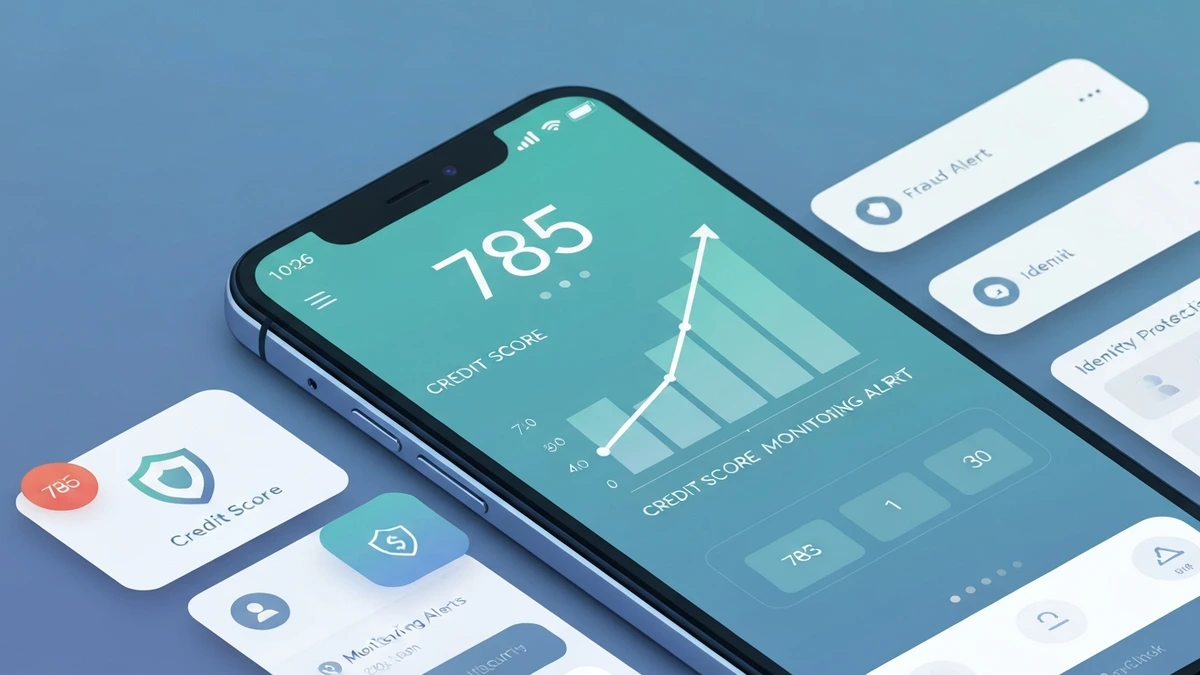
We’ve all been there—applying for a premium credit card or a car loan, only to hold our breath while the lender "checks the score." In high-stakes markets like the US or UK, your credit score isn't just a number; it’s your financial passport. But here’s the reality: with a data breach happening every few seconds, simply having a good score isn't enough. You have to defend it.
In this guide, I’ll break down the best credit monitoring apps that don't just show you numbers but actually act as a shield for your financial identity.
What Is the Difference Between a Credit Score App and a Credit Monitoring App?
Many people use the terms "credit score app" and "credit monitoring app" interchangeably, but they're not exactly the same thing.
A credit score app primarily helps you track your score and understand the factors affecting it. A credit monitoring app goes a step further by alerting you to new accounts, hard inquiries, suspicious activity, and potential identity theft.
The good news? Most of today's best credit score apps combine both functions. Apps like Experian, Credit Karma, and Identity Guard let you monitor your score while also protecting your financial identity in real time.
The "Hidden" Cost of Not Monitoring Your Credit
Consider a hypothetical example: an unfamiliar personal loan appears on a credit report. The appropriate response is to review the report, contact the lender and credit bureau, and follow the relevant identity-theft reporting process.
Professional best credit monitoring apps prevent this by giving you "Instant Pings." The moment a bank even looks at your file, you know about it.
At a Glance: Top Picks for 2026
| Feature | Experian (Best Overall) | Identity Guard (Best Security) | Credit Karma (Best Free) |
| Score Type | Official FICO® Score 8 | VantageScore 3.0 | VantageScore 3.0 |
| Bureau Coverage | Experian (Triple-Bureau Paid) | Equifax, Experian, TransUnion | TransUnion, Equifax |
| Standout Feature | Experian Boost™ | AI Dark Web Scanning | Free Tax Filing Integration |
| Identity insurance | Coverage depends on current plan terms | Coverage depends on current plan terms | Check current product terms |
Deep Dive: Which App Should You Trust?
Experian: The Accuracy Leader
FICO and VantageScore are different scoring models, and lenders choose which model and bureau data to use. A free app’s score may not match the score a particular lender uses, so check the lender’s stated model before making a credit decision.
- Planning example: If you plan to apply for a mortgage in six months, a credit-planning tool may help you model how a balance reduction could affect a score. It cannot reliably predict a lender’s mortgage rate; results depend on the scoring model, full credit file and lender criteria.
- Expert tip: Experian says results from Experian Boost vary; eligible users who receive a boost have reported an average 14-point increase to FICO Score 8. Some users may see no improvement, and many mortgage lenders do not use scores affected by Boost. Do not assume an increase will happen in one day.
Identity Guard: The "Watson" Advantage
Powered by IBM’s Watson AI, this is more of a security tool than a finance app. It’s the best credit monitoring app for high-net-worth individuals or anyone worried about identity theft.
- How it works: It doesn't just watch your credit; it monitors "High-Risk Transactions," like someone trying to change your home title or bank account details.
Credit Karma: The Free Powerhouse
We can't talk about the best credit monitoring apps without mentioning Credit Karma. While it’s ad-supported, its interface is unbeatable for daily tracking.
- Keep in Mind: Your score here might look slightly different than what a bank sees, but for spotting sudden drops or errors, it’s perfect.
What Features Should You Look for in a Credit Score App?
Not all credit score apps offer the same level of protection or insight. Before choosing one, focus on these key features:
- Real-time credit score updates
- Hard inquiry alerts
- Identity theft monitoring
- Credit report access
- Dark web monitoring
- Credit score simulators and planning tools
If your goal is simply checking your score, a free app may be enough. However, if you're actively building credit or preparing for a mortgage, premium monitoring features can often justify the additional cost.
Practical Steps to Strengthen Identity Protection
Simply downloading the best credit monitoring apps is step one. To truly be safe, follow this "Pro-Routine":
- Enable Push Notifications: Don't rely on emails. Set the app to alert your phone the second a "Hard Inquiry" occurs.
- Check the "Accounts" Tab Monthly: Look for any address or phone number changes you didn't authorize. This is often the first sign of a "Sim Swap" or identity takeover.
- The "Freeze" Strategy: In the US, you can freeze your credit for free. Use your monitoring app to keep it frozen and only "Thaw" it when you are actually applying for credit.
American Express (Amex) CreditSecure®
If you are already an American Express cardholder, you might not even need a third-party app. Amex offers CreditSecure®, which is often cited as one of the best credit monitoring apps for premium users.
- Real-Life Perk: Amex provides its users with a "MyCredit Guide," giving you a free VantageScore® 3.0 (refreshed weekly) even if you aren't a customer.
- Why it’s unique: For existing cardmembers, Amex offers identity theft protection that monitors your Social Security Number (SSN) across thousands of websites.
- Example Scenario: I’ve seen Amex users get notified of a potential data breach on a random shopping site before the site itself even announced it. That’s the level of pro-active monitoring you get with a premium provider.
Instead of high-risk churning, many elite investors focus on sustainable wealth building through established networks. A prime example is Mastering the Amex Ecosystem , where strategic point valuation provides high ROI without compromising your credit profile.
💡 Pro Tip: Before you start scaling your point collection, read our expert analysis on the ethical and legal boundaries of card churning to protect your long-term relationship with banks like American Express.
Best Credit Score Apps by User Type
Choosing the right app depends on your financial goals.
- Best Overall: Experian
- Best Free Option: Credit Karma
- Best for Identity Protection: Identity Guard
- Best for Existing Amex Users: Amex CreditSecure®
If you're preparing for a major loan application, Experian's FICO-based tools are hard to beat. For casual monitoring, Credit Karma remains one of the most user-friendly options available. Meanwhile, Identity Guard is ideal for anyone who prioritizes security and fraud prevention above everything else.
Final Verdict from Global Investment Reviews
Your financial data is your most valuable asset. Whether you choose a free tool like Credit Karma or a robust FICO tracker like Experian, the best credit monitoring apps are your first line of defense against fraud and high-interest rates.
Frequently Asked Questions
Credit Karma is widely considered one of the best free credit score apps because it provides free access to your credit scores, credit reports, and monitoring alerts. Experian also offers a free plan that includes access to your Experian credit score and report.
Yes. Many providers, including Experian, Credit Karma, and MyCredit Guide from American Express, allow users to check their credit score for free. Some services may offer additional premium features for advanced monitoring and identity protection.
Credit monitoring apps do not directly increase your credit score. However, they help you identify errors, track progress, monitor inquiries, and detect fraud, all of which can contribute to maintaining or improving your credit profile over time.
Credit Karma provides accurate credit information based on the VantageScore model. However, many lenders use FICO scores, so the score shown in Credit Karma may differ slightly from the score a lender sees during a credit application.
Most major lenders in the United States rely on FICO scores when evaluating credit applications. The exact version may vary depending on the lender and the type of loan, but FICO remains the most commonly used scoring model.
Choosing a credit-monitoring service safely
Compare what the service actually monitors: credit-file changes, score updates, identity-theft alerts, dark-web alerts, dispute support or insurance-like benefits. Check which credit bureau or data source is used, how frequently information refreshes, what the subscription costs after any trial, and how cancellation works. A score shown by one provider may differ from a lender's score because models and data sources can vary.
Before paying, check whether free reports or alerts are available from official sources in your jurisdiction. Monitoring can help detect changes, but it cannot prevent every fraud event. Use unique passwords, multifactor authentication and direct alerts from financial institutions, and respond to unfamiliar accounts through the relevant bureau or institution.
Frequently asked questions
Does a credit-monitoring app improve my credit score?
Monitoring itself does not improve a score. It helps you notice changes; score outcomes depend on the underlying credit-file information and the scoring model.
Is a paid monitoring app always better than a free service?
Not necessarily. Compare the exact alerts, data sources, support and price with free official options, and avoid paying for overlapping features you do not need.
Review checklist
- Verify which credit bureaus and identity signals are covered, how often information updates and what is excluded from the plan.
- Review permissions, data retention, security controls, dispute assistance and cancellation terms before connecting sensitive accounts to Best Credit Score and Monitoring Apps.
- Compare the subscription cost with free reports or alerts available in the user’s jurisdiction; check current official consumer-protection guidance.
Practical checks for the user or business
Credit-monitoring products differ in bureau coverage, update timing, alert quality, dispute assistance and recovery support. An alert can help a person investigate a problem, but monitoring alone does not guarantee that fraud will be prevented or an incorrect record corrected.
Related Resources
Credit Cards & Loans
Credit Card Churning: A Professional Analysis of Ethical, Legal, and Institutional Risks
Explore the credit card churning from a professional finance perspective. Understand the institutional risks, legal framework, and long-term impacts.
Financial Protection
Cross-Border Trade Credit Risk
Analyze cross-border trade credit risk strategies, international credit insurance mechanisms, and corporate liquidity safeguards for global supply chains.

Markets Research
Micro-Investing Apps: How to Build a Wealthy Portfolio with Small Change
Compare micro-investing apps by fees, account minimums, features and risks. Learn how round-ups and recurring contributions work before choosing a platform.
The information provided is for educational and informational purposes only and does not constitute financial, investment, tax, or legal advice.