
Global Mobility · Global Horizons · Asian Dynamics
The Ultimate Investment in Singapore Guide: 10-Year Trends & Strategies for High Returns
Discover the Investment in Singapore Guide by Global Investment Reviews. Explore officially reported FDI data, tax-free growth, and residency through investment.
In a world full of market volatility, smart investors look for a "safe haven"—a place where their capital isn't just stored, but protected and grown. If you’ve been searching for the gold standard of global wealth management, you’ve likely looked at Singapore. At Global Investment Reviews, we believe that understanding the Investment in Singapore Guide is the first step toward true financial diversification.
Why Everyone is Talking About Singapore Right Now
Let’s be honest: most countries make it hard for you to keep your own money. Singapore does the opposite. As we often discuss here at Global Investment Reviews, the city-state generally does not tax capital gains from personal investments, although gains may be taxable as income depending on the facts and nature of the activity. Source: IRAS guidance
It’s not just about the money; it’s about the peace of mind. When you invest in Singapore, you aren't just betting on a country; you are betting on one of the world’s most efficient business hubs.
See More: Singapore Country Profile and Economic Overview: A Strategic Guide for Investors
A Decade of Growth: The Hard Data
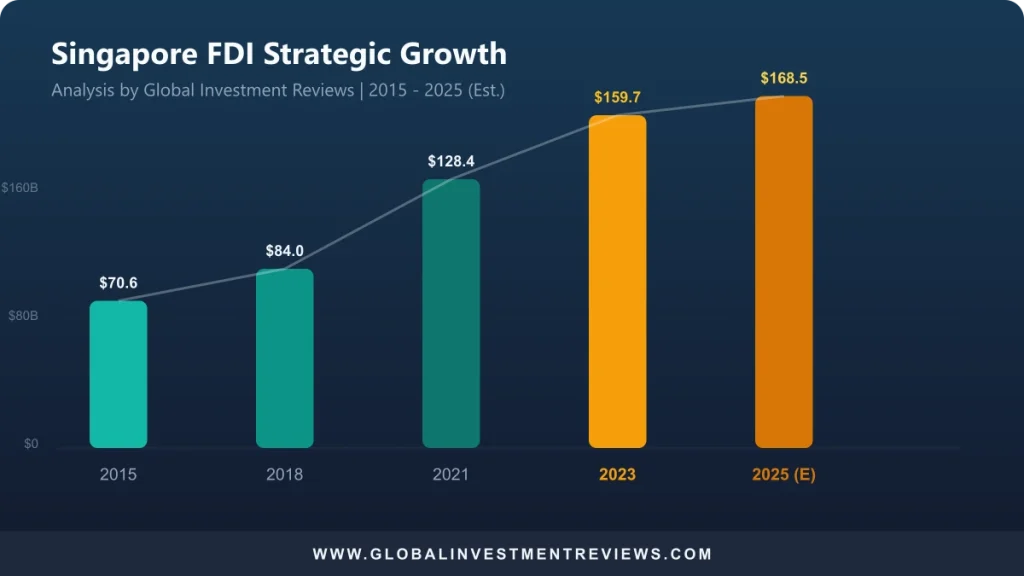
At Global Investment Reviews, we don't just provide opinions—we believe in hard data. Below is a breakdown of how Singapore has performed over the last decade. Despite the global challenges in 2020, notice how quickly the economy bounced back.
Data correction: The earlier table mixed an unsupported historical “FDI inflow” series with GDP-growth figures. The replacement below reports FDI stock in Singapore’s corporate sector, not annual inflows. Values are end-year stock in Singapore dollars (S$ billion), as reported by SingStat.
| Year-end | FDI stock (S$ billion) | Source / definition |
|---|---|---|
| 2020 | 2,127 | SingStat — Foreign Direct Investment in Singapore |
| 2021 | 2,467 | |
| 2022 | 2,616 | |
| 2023 | 2,859 | |
| 2024 | 3,130 |
Analyst Insight: That massive jump in 2021-2022 wasn't luck. It was the result of a "flight to quality" where global investors moved capital out of high-risk regions and poured it into Singapore’s stable ecosystem.
Beyond Profits: Investing for Residency and Citizenship
One of the most valuable insights we can share at Global Investment Reviews is that your capital can buy you more than just dividends—it can buy you a new home.
The Global Investor Programme (GIP) is a prestigious pathway for those who want to call Singapore home. By investing in local businesses, GIP-selected funds, or establishing a Single Family Office (SFO), you can qualify for Permanent Residency (PR). This is a material change for families looking for world-class education, unmatched safety, and seamless global mobility.See More: 07 Cheapest Citizenship by Investment (CBI) Programs in 2026: A Global Investor’s Guide
Proven Methods to Get Started
If you are following this Investment in Singapore Guide, here are the three most common ways to enter the market:
- Singapore Exchange (SGX): Perfect for those who want steady dividends from "Blue Chip" companies.
- REITs (Real Estate Investment Trusts): This is a favorite at Global Investment Reviews. You can own a piece of Singapore’s iconic skyline without the headache of managing physical property.
- The Tech Startup Scene: If you have a higher risk appetite, Singapore is the undisputed "Silicon Valley of Asia," offering incredible opportunities in fintech and green technology.
Verified Sources for Your Due Diligence
Transparency is our core value at Global Investment Reviews. We encourage you to verify these statistics through official government channels:
- Singapore Department of Statistics (SingStat)
- Economic Development Board (EDB) Singapore
- World Bank Data Portal
Final Thoughts from Global Investment Reviews
Singapore isn’t just a place to put your money; it’s a strategic move for your future. Whether you are looking for tax efficiency, a secondary residency, or long-term growth, this Investment in Singapore Guide highlights why the "Little Red Dot" is the biggest player in the game.
What’s your take? Are you looking at REITs or the GIP program for your next move? Let us know in the comments below!
Disclaimer: Investment involves risk. This guide is for informational purposes only. At Global Investment Reviews, we recommend conducting personal due diligence or consulting a certified financial advisor before making large-scale commitments.
How to validate Singapore investment data
When comparing foreign direct investment statistics, check whether the measure refers to flows, positions, commitments or announced projects; these are not interchangeable. Confirm the reporting period, currency, sector classification and whether figures are preliminary or revised. A rise in aggregate FDI does not automatically imply that a particular company or sector offers attractive returns.
For a real investment decision, verify business-registration and licensing requirements, employment costs, office or industrial property needs, tax treatment and the availability of local partners. Use official Singapore statistics and government investment resources for current figures, then corroborate the project-level assumptions with financial statements and independent market research.
Frequently asked questions
Are FDI commitments the same as completed investment?
No. Announced plans, commitments, annual flows and accumulated investment positions describe different stages or measures. Always check the official definition.
Can national FDI growth predict a project's profitability?
No. Profitability depends on the project's economics, competition, costs, execution, legal permissions and the price paid for the opportunity.
Review checklist
- Where reported FDI underpins a claim, distinguish committed capital from funds actually deployed and cite the corresponding official series.
Country and market due diligence
Singapore investment statistics need a consistent definition: announced projects, committed capital and realised investment are not interchangeable. Pair official data with the business case’s licensing, talent, rent, regional-demand and operating-cost assumptions before inferring future returns.
Related Resources
Asian Dynamics
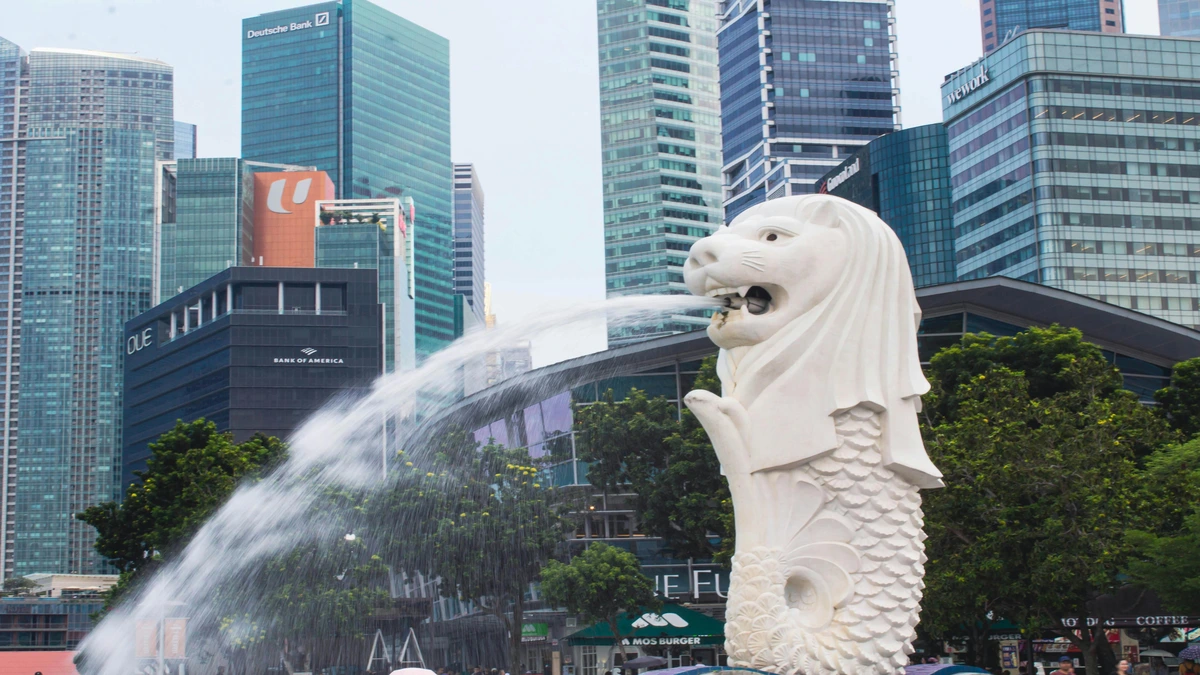
Singapore Country Profile and Economic Overview: A Strategic Guide for Investors
From fishing village to financial giant. Explore our Singapore Country Profile and Economic Overview to reveal its strategic wealth and investment secrets.
Asian Dynamics
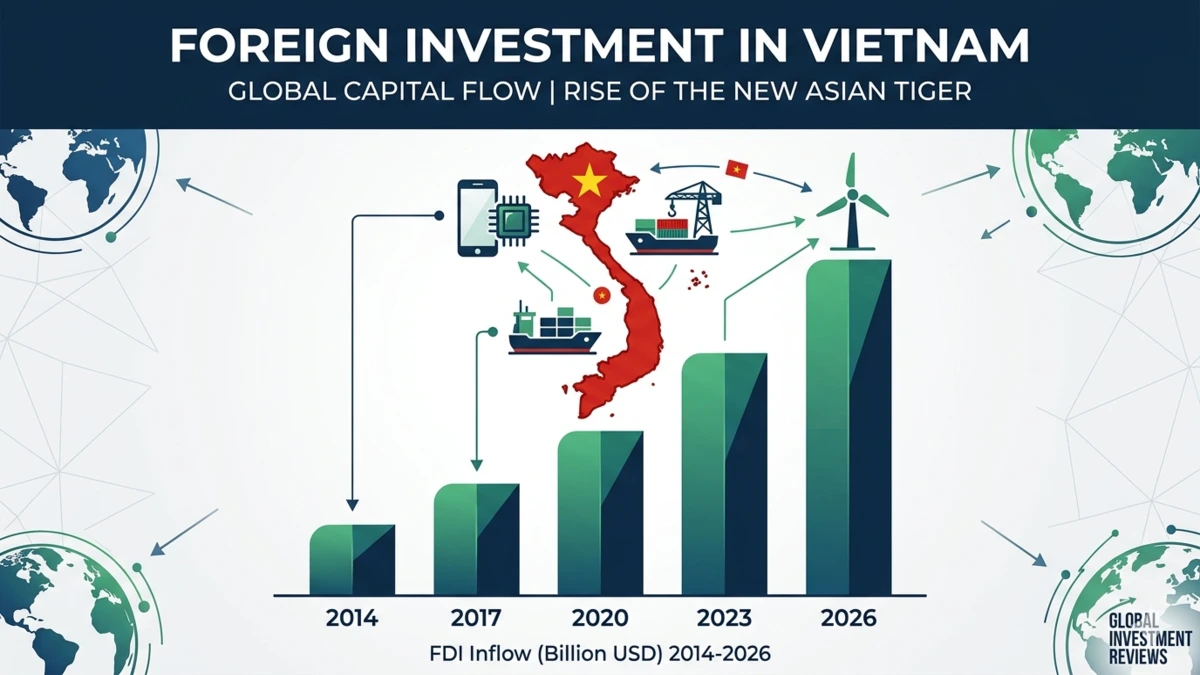
Foreign Investment in Vietnam: A Strategic Analysis of the Last Decade (2014-2026)
How foreign investment in Vietnam evolved from 2014 to 2026: key FDI trends, major sectors and data-driven insights for global investors.
Personal Finance
High-Yield Savings Accounts: 2026 Strategy Guide
Discover optimal high yield savings accounts 2026 strategies, FDIC-insured yield techniques, and expert insights for maximizing cash returns.
The information provided is for educational and informational purposes only and does not constitute financial, investment, tax, or legal advice.