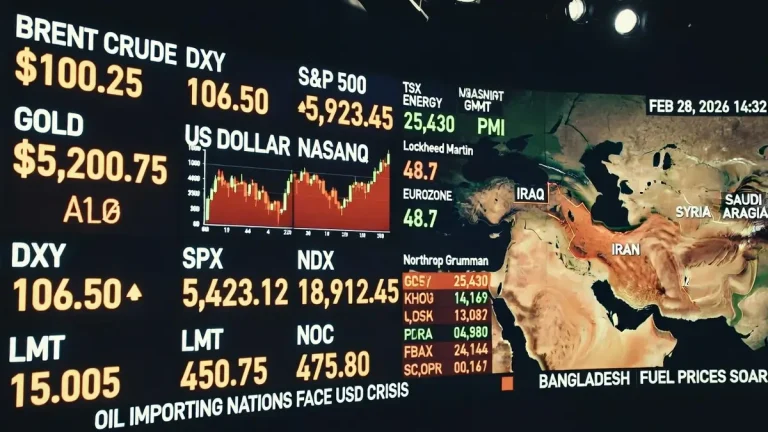
Operation Epic Fury: Decoding Military Strategy and the Looming Global Security Crisis
Operation Epic Fury, launched on February 28, 2026, represents a major escalation in Middle Eastern security dynamics. This joint U.S.-Israeli operation targeted Iranian military installations, missile production sites, naval facilities, and select nuclear-related infrastructure in locations such as Tehran, Isfahan, Qom, Karaj, and Kermanshah. From an operational standpoint, the campaign demonstrates a meticulously planned, multi-domain effort to achieve rapid air and electromagnetic superiority while limiting exposure to retaliation.
Tactical Breakdown: SEAD Operations and Advanced Stealth Technology in Operation Epic Fury
The initial phase of Operation Epic Fury centered on effective Suppression of Enemy Air Defenses (SEAD) to enable follow-on strikes.
- Integrated SEAD Execution: Early reports describe the use of standoff munitions, electronic-attack platforms, and decoys to degrade Iranian integrated air defense systems (IADS), including S-300 derivatives and local variants. Anti-radiation missiles and intensive jamming created penetration corridors for subsequent assets.
- Stealth Platform Utilization: F-35 aircraft, drawing from combined U.S. and Israeli fleets, were key to deep-strike missions. Their low-observability, sensor fusion, and networked targeting allowed engagement of defended high-value targets with minimized detection. Daytime elements in certain phases indicate strong reliance on electronic warfare to maintain surprise and suppression.
This approach reflects contemporary doctrine that emphasizes neutralizing adversary sensors and command structures prior to main kinetic phases.
See more: Operation Epic Fury: $100 Oil Is Here—Is Your Portfolio Protected, or Exposed?
Asymmetric Risks: Retaliatory Cyber Operations and Proxy Maritime Threats Following Operation Epic Fury
Iran maintains a well-documented preference for asymmetric countermeasures, amplifying the broader risks.
- Cyber Domain Vulnerabilities: Iranian cyber capabilities have targeted critical infrastructure in the past. Potential responses could disrupt energy grids, financial networks, and transport systems across Western and Gulf partners, prioritizing economic and societal strain over outright destruction.
- Proxy Maritime and Regional Actors: Groups such as Hezbollah and the Houthis continue to pose threats to key maritime routes in the Eastern Mediterranean and Red Sea. Renewed use of anti-ship missiles, drones, or mines could disrupt global energy transit, elevate shipping insurance costs, and affect supply-chain stability.
These dimensions illustrate how conventional strikes can quickly expand into hybrid, multi-front challenges.
Global Defense Re-alignment: The Moscow-Tehran-Beijing Axis and NATO Implications After Operation Epic Fury
The strikes unfold amid an increasingly coordinated strategic relationship among Russia, Iran, and China.
- Axis Response Posture: Moscow and Beijing have provided Iran with air defense systems, unmanned aerial vehicles, and missile technologies. Prolonged operations may accelerate additional transfers or proxy support. Russia could bolster its regional presence in Syria or the Caspian, while China strengthens economic and diplomatic cover.
- NATO Strategic Calculus in the Middle East: Operation Epic Fury challenges extended deterrence and regional posture. Anticipate increased pressure for U.S. forward basing in the Gulf, enhanced allied air- and missile-defense integration, and renewed discussions on energy diversification and cyber resilience within European NATO members.
Such developments may intensify multipolar competition over Middle Eastern security frameworks.
Modern Warfare Insights: AI-Driven Intelligence and Electronic Warfare in Operation Epic Fury
Operation Epic Fury highlights the growing fusion of artificial intelligence, electronic warfare, and precision effects.
- AI-Enabled Targeting: ISR feeds from satellites, signals intelligence, and airborne platforms were likely augmented by machine-learning tools for target prioritization, real-time battle damage assessment, and adaptive retasking—shortening decision loops against dynamic threats.
- Electronic Warfare Dominance: Coordinated jamming, deception, and spectrum control reportedly neutralized Iranian radar and communication networks, opening safe avenues for stealth platforms and reducing friendly exposure.
These features mark a transition toward information-dominant warfare, where data superiority directly drives kinetic success.
See more: Credit Card Security: Analyzing Tokenization and Biometric Authentication in Payments
Security Implications Summary
| Aspect | Key Observation | Potential Global Impact | Key Sources |
|---|---|---|---|
| Air Superiority | Rapid SEAD + stealth penetration in Operation Epic Fury | Benchmark for high-threat peer engagements | Reuters, Aviation Week |
| Asymmetric Retaliation | Elevated cyber and proxy maritime risks post-strikes | Threats to energy flows, supply chains, and infrastructure | CNN, Al Jazeera |
| Strategic Axis Dynamics | Deepening Moscow-Tehran-Beijing alignment | Strain on NATO cohesion and regional posture | Wikipedia Entry, NYT Live |
| Technological Edge | AI-intelligence fusion and EW integration | Drives investment in advanced C4ISR and autonomy | CBS News, NBC News |
| Escalation Pathways | Multi-domain responses beyond initial theater | Increased volatility in energy markets and cyber space | Washington Post, Iran International |
Operation Epic Fury serves as a real-time demonstration of integrated joint operations in a contested environment. Its progression will shape deterrence models, alliance strategies, and long-term defense investment priorities. As events continue to develop, close observation of both conventional and asymmetric responses remains critical for understanding evolving global security equilibria.

About the Author: Iqbal Hossain
Iqbal is the Founder and Lead Strategist of Global Investment Reviews. As a Financial Analyst and Geopolitical Strategist with over 7 years of experience, he specializes in connecting global events with market trends to help investors make informed, long-term decisions.