Middle East war and economic challenge
Table of Contents
Middle East war and economic challenge is a critical topic in global investment reviews.
Middle East Conflict and Global Markets: Navigating the New Economic Reality
As geopolitical fault lines fracture across the Levant and the Persian Gulf, global markets are once again forced to reckon with a harsh reality: the inextricable link between the Middle East war and economic challenge worldwide. For institutional investors and wealth managers, the current volatility is not merely a transient headline risk; it represents a structural shift in energy security, supply chain resilience, and macroeconomic forecasting. As crude oil benchmarks fluctuate and inflation expectations recalibrate, understanding the multifaceted financial fallout of this regional instability is paramount for safeguarding capital and capitalizing on defensive positioning.
The Energy Nexus: Oil Volatility and Inflationary Pressures
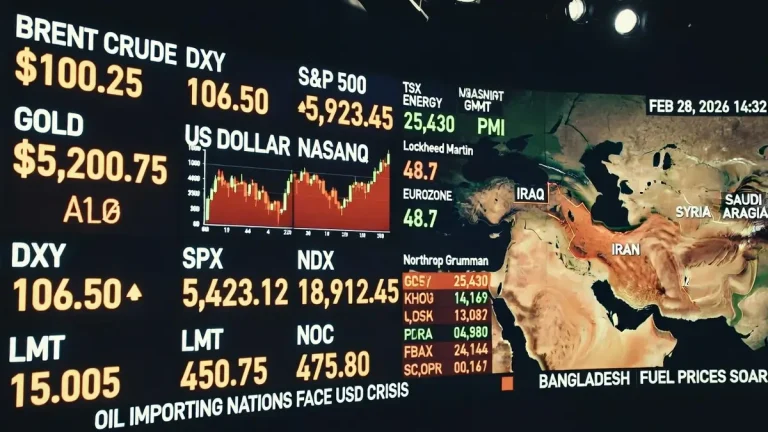
Energy markets remain the primary transmission mechanism for geopolitical shocks originating in the Middle East. Any escalation that threatens critical transit choke points—most notably the Strait of Hormuz, through which roughly a fifth of the world’s petroleum passes—sends immediate shockwaves through global commodity exchanges.
When supply disruptions loom, Brent Crude and WTI futures experience sharp upward spikes, reigniting fears of sticky, structural inflation. Central banks, already battling the lagging effects of post-pandemic monetary tightening, find themselves in a precarious bind. A sustained energy price shock limits the scope for anticipated interest rate cuts, forcing fixed-income investors to reprice sovereign debt yields and corporate borrowing costs.
Key energy risk indicators to monitor include:
- Insurance and freight premiums for tankers navigating high-risk maritime corridors.
- Strategic Petroleum Reserve (SPR) drawdowns by major economies to artificially suppress spot prices.
- Upstream capital expenditure shifts by non-OPEC+ producers aiming to capture market share amid supply anxieties.
Supply Chain Fractures and Maritime Logistics
Beyond fossil fuels, the conflict has severely disrupted maritime trade routes, particularly through the Red Sea and the Suez Canal. Major container shipping lines have been forced to reroute vessels around the Cape of Good Hope, adding thousands of nautical miles and weeks of transit time to Asia-Europe trade loops.
This logistical bottleneck mirrors the pandemic-era supply chain crises, driving up freight rates and operational expenditures for multinational corporations. Retailers, industrial manufacturers, and technology hardware firms face compressed operating margins as input costs surge. For equity analysts, earnings season guidance now demands a rigorous stress-testing of corporate supply chain diversification and inventory management strategies.
Safe-Haven Assets and Institutional Portfolio Realignment
In times of acute geopolitical stress, capital naturally gravitates toward traditional safe havens. Gold prices have tested historic highs, driven by central bank accumulation and retail hedging against currency devaluation. Concurrently, the US Dollar Index (DXY) frequently experiences sudden inflows, driven by global liquidity demands during periods of heightened systemic risk.
However, institutional asset allocators are adopting a more nuanced approach than simple flight-to-safety maneuvers. The playbook for navigating a protracted Middle East conflict involves strategic sector rotation and tactical hedging:
- Defense and Aerospace: Increased military budgets and procurement cycles globally provide revenue visibility for prime contractors.
- Alternative Energy Transition: Energy security concerns are accelerating capital deployment into domestic renewables, nuclear energy, and grid infrastructure.
- Quality and Dividend Aristocrats: Equities with robust balance sheets, pricing power, and low debt-to-equity ratios offer insulation against margin compression.
Conclusion and Future Outlook
The convergence of geopolitical instability and macroeconomic headwinds underscores the fragility of the current global economic expansion. While markets have historically proven resilient in absorbing localized conflicts, the compounding nature of supply chain bottlenecks, energy price volatility, and persistent inflation creates a uniquely complex operating environment. For global investors, success in this climate requires moving beyond reactionary trading to embrace rigorous risk mitigation, asset diversification, and a sharp focus on corporate fundamentals. As the situation evolves, maintaining agility and a data-driven approach will be the ultimate differentiator between capital preservation and capital erosion.

Mominur Rahman
With over three years of experience in corporate finance and a strong foundation in reporting, I specialize in transforming complex data into actionable investment insights. You can explore my full professional background, certifications, and academic journey on my <a href="https://globalinvestmentreviews.com/our-experts/about-mominur-rahman/">official expert profile</a>.