
Portfolio Tracker
ake control of your future with Global Investment Reviews' portfolio tracker. Easily manage assets, monitor net worth, & master wealth strategies. Start today!

Portfolio Tracker
Why Using a Portfolio Tracker is the Smartest Financial Move You’ll Make Today
If you have ever felt that sinking sensation of not knowing exactly where your money is growing—or shrinking—you are not alone. Most people treat their finances like a game of hide-and-seek, checking their bank apps sporadically but never truly seeing the "big picture."
At Global Investment Reviews, we believe that a portfolio tracker is the most essential tool in any serious investor's toolkit. It’s not just about crunching numbers; it’s about taking the driver’s seat of your financial future.
Why Global Investment Reviews Advocates for Unified Tracking
We have analyzed countless financial strategies, and the data is clear: those who consolidate their assets perform better. Your spreadsheet might be a good starting point, but manual formulas are prone to human error and often fail to provide a real-time perspective in the dynamic market of 2026. Whether you are holding stocks, gold, or emerging crypto-assets, Global Investment Reviews recommends using a centralized dashboard that breathes with the market.
Real-World Examples: The "GIR" Strategy
Let’s look at how our community implements these strategies:
- The Rebalancing Approach: One of our regular contributors, Sarah, used to check five different apps to see her investments. By consolidating everything into a single tracker, she realized she was over-indexed on one tech stock. This visual clarity allowed her to rebalance her portfolio, reducing her risk while increasing her annual yield by 1.5%.
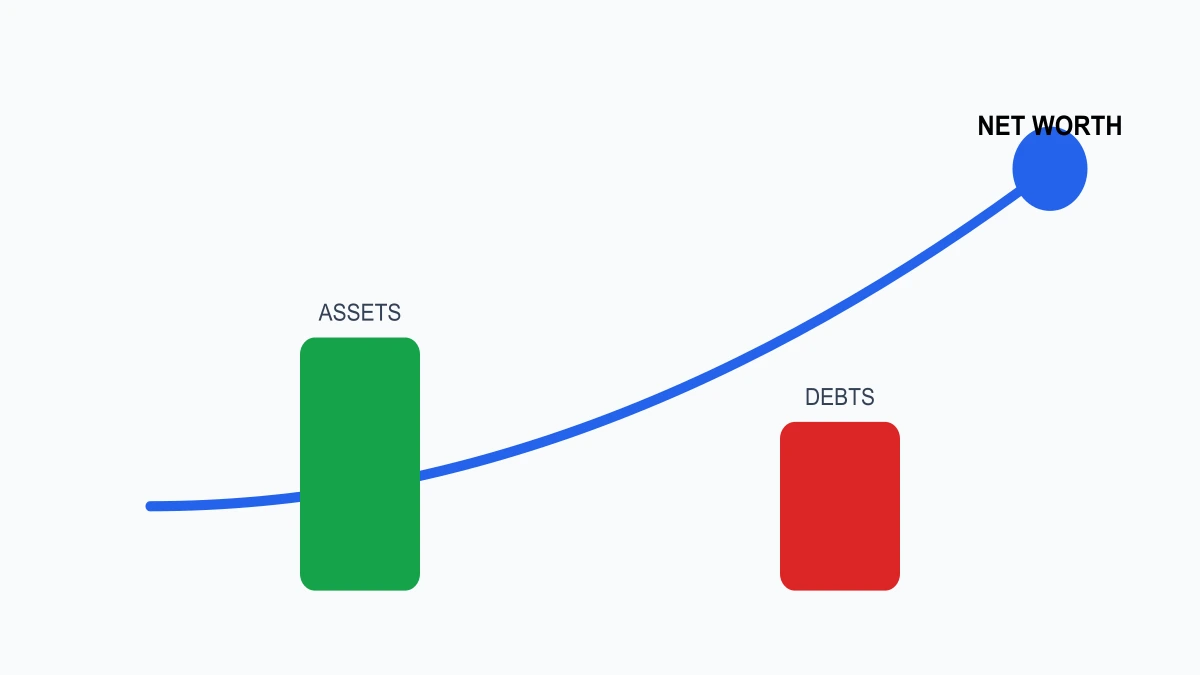
- The Debt-Neutralizing Strategy: At Global Investment Reviews, we often emphasize that net worth is not just about assets—it’s about debt management. Many of our readers use a portfolio tracker to monitor their debt-to-asset ratio. By inputting their mortgage alongside their investments, they turn a daunting 20-year payment plan into a 14-year goal.
How to Track Net Worth Like an Institutional Pro
Follow the institutional-grade approach recommended by our experts:
- Categorize Your Assets: Don't just list "money." Break it down into Liquid Cash (Emergency Fund), Growth Assets (Stocks/ETFs), and Hard Assets (Gold/Real Estate).
- Account for Liabilities: A true portfolio tracker considers debt as a negative asset. According to the research at Global Investment Reviews, you aren't "building wealth" if you have $10k in stocks but $15k in high-interest consumer debt.
- The "Rule of 72" Check: Use your tracker to see if your current growth rate will allow your money to double in the time frame you desire.
How to Use the Global Investment Reviews Portfolio Tracker
Managing your wealth shouldn't be a chore. Follow these simple steps to master your financial dashboard:
1. Add Your Assets
- Name Your Asset: Start by entering the name of your investment (e.g., "Tech Stocks," "Gold Reserve," or "Real Estate").
- Smart Input: If you are tracking stocks or crypto, enter the Quantity and Price Per Unit. The tool will automatically calculate the Total Value for you. For other assets, simply enter the current Total Value directly.
- Add to Portfolio: Click the "Add to Portfolio" button to instantly update your dashboard.
2. Visualize Your Wealth
The doughnut chart above your list will update in real-time. This visual breakdown is critical for diversification. At Global Investment Reviews, we recommend keeping a close eye on your chart to ensure no single asset class dominates your entire net worth.
3. Manage Your Data (Backup & Security)
We prioritize your privacy. This tool stores your data locally on your browser. To ensure you never lose your progress:
- Download Data: Click the "Download" button to save your portfolio as a
.jsonfile on your computer. - Upload Data: If you switch devices or clear your browser cache, click "Upload" and select your previously saved file to restore your portfolio instantly.
4. Rebalancing Your Portfolio
As market conditions change, your asset percentages will shift. We recommend reviewing your tracker at the end of every month. If your chart shows that one asset has grown significantly compared to others, it might be time to rebalance your strategy.
Pro Tip: Treat this tracker as your "Financial Compass." It is not meant to replace your brokerage account, but to give you the clarity needed to make informed investment decisions.
A practical note on Portfolio Tracker
The question worth answering: This page is most useful when you focus on maintaining a clean record of holdings and cash flows. Reconciling positions across brokerage statements after deposits, dividends and partial sales. Start by recording the input source, the date or period covered, and any assumption you had to supply yourself. That makes the result easier to reproduce and helps another person understand what the output actually says.
How to use the result responsibly
Read the output alongside the inputs rather than as a stand-alone verdict. Change one assumption at a time and observe whether the conclusion changes materially. If the tool accepts a range, test more than one plausible case; if it accepts a file or pasted data, preserve an untouched copy of the original. Where the result will support a published claim or an important decision, keep a brief record of the method and source date.
A mistake specific to this kind of task
A tracker can drift if corporate actions, fees, currency conversions or cash balances are missed. This is why the output should be described as an estimate, diagnostic or comparison where appropriate—not as a guarantee. Avoid mixing currencies, periods, definitions or data sources merely because their labels look similar.
Independent check before acting
Reconcile units and cash to statements, record transaction dates and fees, and avoid treating an unverified imported price as an official quote. If the result conflicts with a statement, official record, provider terms or the original dataset, investigate the difference before relying on it. The tool is intended to make a task clearer, not to replace the source system or professional advice when the consequences are material.
Reader takeaway: Keep the assumptions visible, verify the underlying evidence and use this result as one part of a reasoned decision.
Related Resources
Net Worth Calculator
Track your total assets and liabilities with our advanced Net Worth Calculator. Calculate your debt-to-asset ratio and monitor your financial growth today.
Portfolio Allocation Analyzer
Analyze portfolio weights, target allocation drift, and concentration with a visual allocation chart and CSV import/export.
Portfolio Rebalancing Planner
Calculate target portfolio values and estimated buy or sell amounts from current holdings and target weights.