Global Mobility · Global Horizons · North America
How to Invest in USA Stock Market as an American in 2026
Master the US stock market in 2026. This expert roadmap covers ETF strategies, new IRS contribution limit, and AI-driven wealth building for American investors.
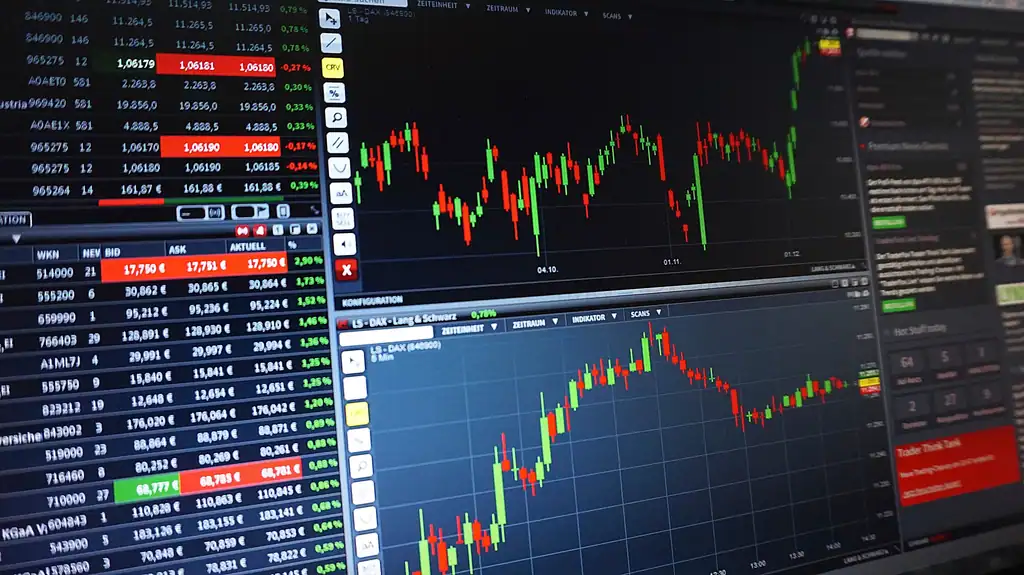
If you had told an investor back in 2023 that the S&P 500 would be knocking on the 8,000 mark by 2026, they probably would have called it wishful thinking. Yet, here we are. At Global Investment Reviews, we have been tracking this transition from the "inflation anxiety" of the early 20s to what our research team calls the “Efficiency Era.”
In 2026, Artificial Intelligence has shifted from a speculative buzzword to a fundamental utility. With the Federal Reserve finally stabilizing interest rates in late 2025, we are now in a market where real, AI-driven productivity is the primary engine for equity valuations.
Our Perspective: The Psychology of the 2026 Market
Short-term market declines can occur for many reasons, including earnings surprises, macroeconomic news, liquidity conditions and automated trading. A specific 5% intraday move should not be attributed to high-frequency algorithms without event-specific evidence; market volatility is not predictable with certainty.
Iqbal’s Take: Don't let a machine-driven flash crash spook you out of your positions. In 2026, we focus on Productivity Metrics over Sentiment Indicators. If the company is getting more efficient, the stock price will eventually follow. Avoid the FOMO trap; discipline is your greatest asset this year.
1. The Anchor: Passive Powerhouses (ETFs)
For the core of your portfolio, we still advocate for the passive route. However, in 2026, the rally has broadened. It’s no longer just the "Magnificent Seven" leading the charge; we’re seeing a massive resurgence in Industrials and Energy.
- The Strategy: We recommend "Smart Dollar-Cost Averaging." Instead of just blindly investing monthly, consider slightly increasing your contribution during those algorithm-driven dips.
- Global Investment Reviews’ Top Picks: * VOO (S&P 500) for large-cap stability.
- VTI (Total Market) to capture the small-cap recovery.
- QQQM (Nasdaq 100) for pure-play efficiency growth.
2. Hunting for Alpha: The "Nuclear-AI" Convergence
This is where our proprietary 2026 outlook gets unique. We believe the biggest "Alpha" (market-beating return) isn't in software anymore—it's in the Energy Infrastructure that feeds the AI beast.
AI data centers require immense, 24/7 power. This has made Nuclear Energy and Small Modular Reactors (SMRs) the "New Gold" of 2026. At Global Investment Reviews, we are closely monitoring the convergence of Big Tech and Energy providers.
3. Global Investment Reviews: Strategy Matrix 2026
| Investment Style | 2026 Outlook | Best For... | Global Investment Reviews Rating |
| Index Funds | Steady Growth | The "Set-and-Forget" | ⭐⭐⭐⭐⭐ |
| Nuclear/Energy | Aggressive | The Growth Seeker | ⭐⭐⭐⭐ |
| Dividend Growth | Defensive | Passive Income | ⭐⭐⭐ |
| Roth IRA/401(k) | Essential | Long-term Security | ⭐⭐⭐⭐⭐ |
4. Tactical Rebalancing: Trimming the Tech Fat
After the explosive tech rally of 2025, many portfolios we review are dangerously "top-heavy." Our 2026 advice is simple: Rebalance. Take a portion of your gains from over-extended tech stocks and rotate them into REITs (Real Estate Investment Trusts) or Healthcare. These sectors are currently undervalued and provide a crucial safety net for the second half of 2026.
5. The 2026 Tax Shield: SECURE 2.0 Realities
For 2026, certain participants in plans with Roth catch-up features must make catch-up contributions on a Roth basis if their prior-year wages from the plan sponsor exceeded US$150,000. This is not a rule based simply on total household income; eligibility and implementation depend on the plan and IRS rules. IRS catch-up contribution guidance.
- 401(k) employee elective-deferral limit for 2026: US$24,500, subject to plan eligibility and IRS rules. IRS contribution limits.
- IRA contribution limit for 2026: US$7,500, subject to compensation, age and eligibility rules. IRS 2026 limits announcement.
- Higher 401(k) catch-up limit for eligible participants aged 60–63 in 2026: US$11,250 instead of the standard catch-up limit. Availability depends on plan terms and eligibility. IRS catch-up guidance.
Global Investment Reviews FAQ: 2026 Edition
Q: Is the AI revolution just a bubble?
A: At Global Investment Reviews, we distinguish between "Hype AI" and "Utility AI." We avoid companies that just talk about AI and focus on those with measurable AI Revenue.
Q: How do I protect my capital from a 2026 correction?
There is no universally appropriate equity/TIPS allocation for every investor. Portfolio weights should reflect the investor’s time horizon, liquidity needs, risk capacity, tax status, inflation exposure and existing holdings. Treat any percentage mix in an example as hypothetical rather than a GIR recommendation, and consider a qualified fiduciary adviser for personal advice.
The Bottom Line
The 2026 market rewards the patient and the prepared. By maximizing your tax-advantaged accounts, anchoring your capital in ETFs, and selectively chasing the Energy-AI convergence, you are positioning yourself for generational wealth.
Financial Disclosure: This guide is part of our educational series at Global Investment Reviews. Investing in the stock market involves significant risk. Always consult with a certified financial advisor before making major financial decisions. Past performance is never a guarantee of future success.
Build a plan before choosing US-market investments
Define your objective, time horizon, liquidity needs and tolerance for losses before comparing individual shares with diversified funds. Review expense ratios, trading costs, concentration, tax treatment, dividend handling and the currency exposure that applies to your personal circumstances. Past performance, a popular ticker or a strong company story does not establish that a security is fairly priced or suitable for every investor.
Check the broker's regulatory status and read the product's official disclosures. Investors outside the US should also investigate local reporting duties, withholding taxes, estate considerations and whether their chosen account structure is appropriate. Verify rules with current official sources or a qualified adviser rather than relying on generalized online tax summaries.
Frequently asked questions
Is an index fund risk-free?
No. Diversification can reduce single-company risk but cannot eliminate market losses, currency effects, fees or the risk of investing at an unfavorable time.
What should a non-US investor check first?
Confirm broker eligibility, product availability, tax reporting, currency conversion costs and any home-country rules that apply to foreign investments.
Key assumptions to test
A US stock-market plan should distinguish account type, brokerage costs, tax consequences, diversification and the investor’s time horizon. Index-level performance is not a forecast, and investors outside the United States may also face currency conversion and withholding issues.
Related Resources
Latin America & Caribbean
How to Invest in the Brazil Stock Market: A 2026 Strategic Guide for Foreign Investors
How to invest in Brazil's stock market: a breakdown of B3 shares, ETFs and strategies for 2026 growth opportunities.
Stock List
Access live stock market data, real-time top gainers, and deep financial analytics. Empower your investment strategy with institutional-grade data from GIR Finance.
Stock Analysis
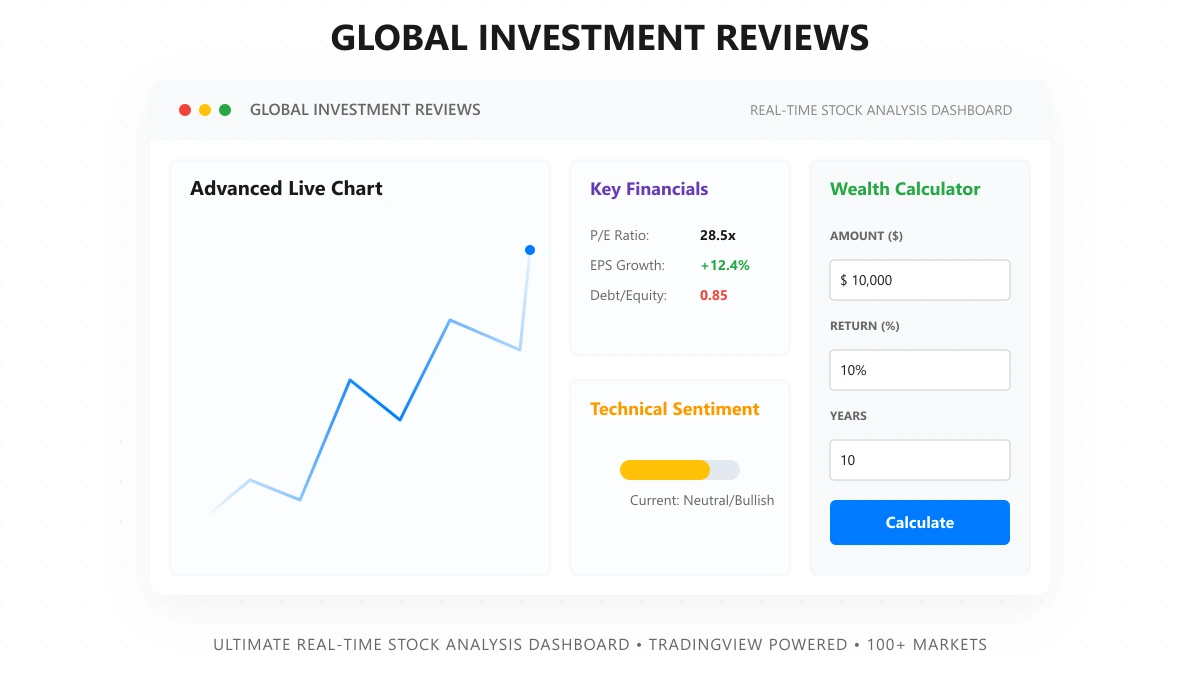
Analyze markets like a pro with Global Investment Reviews! Use our real-time stock analysis dashboard for live charts, financial data, and technical insights.
The information provided is for educational and informational purposes only and does not constitute financial, investment, tax, or legal advice.