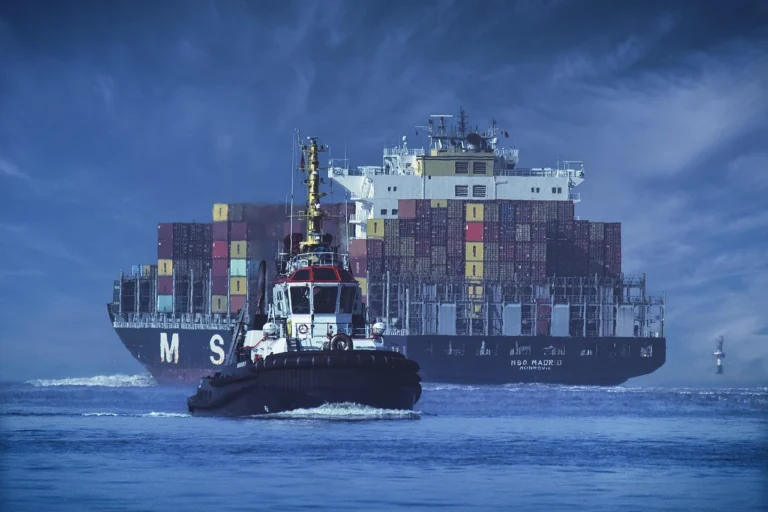
Global Economic Corridors 2026
Table of Contents
- Macroeconomic Shifts and Strategic Imperatives
- Evaluating Shifting Trade Route Infrastructure
- Comparative Analysis of Major Regional Corridors
- Cross-Border Capital Flows and Financing Paradigms
- Supply Chain Realignment and Industrial Policy
- Geoeconomic Trade Networks and Sovereign Risk Assessment
- Frequently Asked Questions
- What are the primary drivers behind the current realignment of international trade networks?
- How are institutional investors adjusting their portfolios to account for increased geopolitical fragmentation?
- What role do sovereign wealth funds play in financing modern trade infrastructure?
- Why is traditional sovereign risk analysis insufficient in today's macroeconomic environment?
- Conclusion and Future Outlook
9 min read
Global Economic Corridors 2026 is an important topic covered by Global Investment Reviews.
The contemporary landscape of international finance and sovereign strategy is undergoing a structural transformation driven by the reconfiguration of global economic corridors. As geopolitical rivalries intensify, post-pandemic operational vulnerabilities become apparent, and technological paradigms shift, capital allocation models are forced to adapt to a vastly more fragmented and multipolar world order. For institutional investors, multinational corporations, and sovereign wealth funds, understanding the intricate dynamics of these arteries of commerce is no longer optional; it is a prerequisite for safeguarding portfolio alpha and mitigating systemic risk. The traditional models of frictionless globalization, dominated by hyper-efficient, just-in-time logistics networks, have given way to an era characterized by resilience, strategic redundancy, and national security-driven industrial policies. This comprehensive financial analysis examines how shifting trade routes, massive infrastructure deployments, and evolving capital movement patterns are rewriting the macroeconomic rulebook for the global economy.
Macroeconomic Shifts and Strategic Imperatives
The acceleration of geopolitical fragmentation has fundamentally altered the calculus of international investment. For decades, capital flowed along the paths of least resistance, seeking out maximum labor arbitrage and lowest production costs regardless of geography or governance alignment. Today, institutional portfolios must account for the weaponization of trade, sweeping tariff regimes, and the pervasive influence of industrial policy. Nations are actively redesigning their economic architectures to insulate critical sectors from external shocks, creating a paradigm where national security considerations routinely supersede purely neoclassical economic efficiency.
This macro-level pivot manifests visibly in the evolution of trade route infrastructure. Governments and multilateral development banks are funneling unprecedented sums into alternative logistics networks that bypass historical chokepoints and politically volatile regions. Ports, rail corridors, and digital conduits are being rapidly retrofitted or constructed from the ground up to support strategic autonomy. Investors analyzing these developments must look beyond basic civil engineering metrics and evaluate projects through the lens of sovereign backing, long-term operational viability, and alignment with regional security pacts.
The systemic recalibration of production and distribution models is dismantling legacy supply chains. Corporations are moving away from single-source manufacturing hubs toward multi-hub, regionalized ecosystems. This transition requires massive upfront capital expenditures, reshaping balance sheets across the industrial and technology sectors. Asset managers must carefully scrutinize the debt-to-equity ratios and free cash flow generation of corporations undertaking these multi-year transitions, as execution risks remain exceptionally high amidst persistent macroeconomic headwinds and tightening global liquidity.
Furthermore, the cost of capital remains a decisive variable in the execution of these capital-intensive strategies. Higher baseline interest rates maintained by major central banks have increased the hurdle rates for long-duration infrastructure investments. Consequently, project finance syndicates are demanding higher risk premiums, forcing sovereign sponsors to offer enhanced credit guarantees or take larger equity stakes to ensure project viability.
Evaluating Shifting Trade Route Infrastructure
The physical manifestation of geostrategic competition is nowhere more evident than in the transformation of global maritime and overland shipping lanes. Traditional maritime routes, such as the Suez Canal and the Malacca Strait, are facing mounting vulnerabilities ranging from geopolitical conflicts to climate-induced disruptions. In response, global powers are heavily financing alternative pathways that promise greater predictability and security for international commerce.
A prime example of this evolution is the prioritization of northern maritime passages and trans-continental rail links designed to connect dynamic manufacturing centers directly with consumer markets. These multi-modal logistics corridors require deep institutional financing, often orchestrated via public-private partnerships and sovereign syndicates. The successful monetization of these infrastructure assets depends heavily on sustained trade volume growth and stable regulatory frameworks across multiple jurisdictions.
Comparative Analysis of Major Regional Corridors
| Corridor Designation | Primary Geographic Reach | Key Infrastructure Focus | Dominant Capital Source | Primary Sovereign Risk Factor |
|---|---|---|---|---|
| Trans-Eurasian Rail Network | Central Asia to Europe | High-speed freight rail, dry ports | Sovereign funds, Bilateral loans | Geopolitical sanctions, transit disputes |
| Indo-Pacific Maritime Artery | Southeast Asia to Middle East | Deepwater ports, digital cables | Multilateral banks, Private equity | Naval chokepoint vulnerability |
| Trans-American Nearshoring Route | Latin America to North America | Industrial parks, cross-border highways | FDI, Corporate balance sheets | Regulatory instability, security friction |
| North-South Transport Corridor | South Asia to Eurasia | Multimodal rail and shipping terminals | State-backed development funds | Compliance risks, secondary sanctions |
As detailed in the comparative matrix above, each regional network presents a unique risk-reward profile for institutional capital. The operational success of these routes relies not only on physical construction but also on the harmonization of customs procedures, digital documentation standards, and cross-border legal frameworks. Investors must weigh the potential for high structural yields against the persistent threat of regulatory friction and political interference.
Cross-Border Capital Flows and Financing Paradigms
The financial architecture supporting contemporary logistics and manufacturing networks has evolved dramatically. Traditional project finance models are being stress-tested by higher interest rate environments and shifting risk perceptions. Financial institutions are increasingly deploying syndicated loans, green bonds, and specialized infrastructure funds to underwrite the massive capital expenditures required for modernizing international trade pathways.
Private equity and venture capital firms are also pivoting toward supply chain technology, logistics automation, and critical mineral extraction within favored trade zones. This capital movement reflects a broader trend of friend-shoring, where investment is intentionally directed toward allied nations to mitigate systemic supply shocks. Portfolio managers are restructuring asset allocations to capture these structural themes by targeting industrial real estate trusts, logistics providers, and specialized mining conglomerates operating within secure corridors.
Sovereign wealth funds from capital-surviving nations are playing an increasingly assertive role in financing cross-border mega-projects. These entities often act as anchor investors, providing the long-term, patient capital necessary to absorb initial development losses. However, host nations must carefully balance the influx of foreign capital with national sovereignty concerns, leading to stricter foreign investment screening mechanisms and regulatory oversight across both developed and emerging markets.
Supply Chain Realignment and Industrial Policy
The convergence of state intervention and corporate strategy has elevated industrial policy to a dominant driver of economic activity. Governments across major economies are deploying multi-billion-dollar subsidies, tax credits, and regulatory mandates to incentivize domestic manufacturing and secure access to critical inputs such as semiconductors, rare earth elements, and advanced battery components.
This deliberate industrial restructuring has profound implications for corporate profitability and margin stability. Companies that fail to adapt their operational footprints risk severe supply chain disruptions and regulatory penalties. Conversely, agile enterprises that successfully navigate this transition are securing robust pricing power and long-term government contracts. Institutional analysts monitoring these developments must evaluate corporate earnings quality through the lens of subsidy reliance versus organic competitive advantage.
The ripple effects of this operational realignment extend far beyond industrial conglomerates, touching logistics providers, real estate investment trusts specializing in warehousing, and energy infrastructure developers. The long-term success of these industrial policies depends heavily on workforce development, technological innovation, and the reduction of non-tariff trade barriers among participating nations. Without these foundational elements, heavy state subsidies risk creating structural inefficiencies and long-term fiscal burdens for the sponsoring governments.
Geoeconomic Trade Networks and Sovereign Risk Assessment
Assessing sovereign risk in a fragmented global economy requires a sophisticated framework that goes well beyond traditional credit ratings and debt-to-GDP ratios. Sovereign risk analysts must now evaluate a nation’s geostrategic alignment, its vulnerability to economic coercion, and the resilience of its critical infrastructure against both physical and cyber threats.
As trade networks become more politically polarized, emerging market economies find themselves navigating delicate diplomatic and economic balancing acts. Nations that successfully position themselves as neutral hubs or indispensable nodes within multiple competing networks can attract substantial foreign direct investment. Conversely, countries that become isolated or overly dependent on a single external power risk severe economic contraction should geopolitical dynamics shift.
Climate change and extreme weather events pose an escalating threat to physical infrastructure assets. Port facilities, coastal rail lines, and energy grids are increasingly vulnerable to environmental shocks, introducing new layers of operational and financial risk for asset owners and insurers. Incorporating comprehensive environmental, social, and governance metrics into sovereign and project-level risk assessments is now an essential requirement for prudent portfolio management.
Frequently Asked Questions
What are the primary drivers behind the current realignment of international trade networks?
The primary drivers include escalating geopolitical rivalries, post-pandemic operational vulnerabilities, national security concerns, and the widespread implementation of state-led industrial policies that prioritize resilience and self-reliance over pure economic efficiency.
How are institutional investors adjusting their portfolios to account for increased geopolitical fragmentation?
Institutional investors are actively reallocating capital toward allied and politically stable regions through friend-shoring initiatives, increasing exposure to supply chain technology and automation, and incorporating advanced geostrategic risk frameworks into their sovereign and asset-level evaluations.
What role do sovereign wealth funds play in financing modern trade infrastructure?
Sovereign wealth funds act as critical anchor investors, providing the long-term, patient capital required to fund capital-intensive mega-projects, multi-modal transport corridors, and strategic industrial developments that traditional commercial lenders may view as too high-risk.
Why is traditional sovereign risk analysis insufficient in today’s macroeconomic environment?
Traditional sovereign risk models focus primarily on fiscal metrics and debt sustainability, whereas modern assessment requires evaluating a nation’s geostrategic alignment, vulnerability to trade weaponization, critical infrastructure resilience, and exposure to supply chain disruptions.
Conclusion and Future Outlook
The structural transformation of the international economic order is rewriting the rules for capital deployment, corporate strategy, and sovereign risk management. As nations and corporations continue to prioritize resilience over pure cost minimization, the architecture of international trade will remain defined by regionalization, strategic redundancy, and active state intervention. For institutional investors and financial professionals, navigating this complex terrain demands continuous vigilance, rigorous data-driven analysis, and a sophisticated understanding of the geopolitical forces shaping the modern world. Those who successfully adapt their portfolios to these shifting realities will be best positioned to capture long-term value and weather the structural volatility of the years ahead.
Related: Global Logistics Real Estate 2026 Strategy Guide
Recommended: Global Logistics Corridors 2026

About the Author: Iqbal Hossain
Iqbal is the Founder and Lead Strategist of Global Investment Reviews. As a Financial Analyst and Geopolitical Strategist with over 7 years of experience, he specializes in connecting global events with market trends to help investors make informed, long-term decisions.