
Personal Finance · Wealth Management
Asset Protection Trusts: A Comparative Analysis of Domestic and Offshore Frameworks in Developed Markets
Asset protection trusts (APTs) explained: a domestic vs offshore comparison across the US, EU, Canada, Australia and New Zealand.
Executive Summary
This research provides a technical analysis of Asset Protection Trusts (APTs) as a sophisticated mechanism for wealth preservation across Tier-1 jurisdictions. By evaluating the statutory nuances in the United States, Canada, the European Union, Australia, and New Zealand, we examine how high-net-worth individuals navigate aggressive litigation environments and shifting regulatory mandates.
This publication details the structural mechanics and strategic relevance of APTs within the 2026 global macroeconomic and compliance landscape.
The Modern Imperative for Wealth Insulation
Preserving accumulated capital has evolved far beyond basic portfolio diversification. For investors and professionals in developed economies, the primary threat to long-term wealth is often not market performance, but rather “predatory litigation” and jurisdictional instability. In a climate where legal judgments can dismantle decades of wealth creation, the strategic use of trust law has become essential.
The Asset Protection Trust (APT) has emerged as a cornerstone of modern estate planning. Unlike standard revocable living trusts, which are primarily designed for probate avoidance, APTs are engineered for legal durability. They are specifically intended to insulate assets from potential creditors, malpractice claims, and unforeseen civil judgments. As of 2026, the demand for these structures has surged among US physicians, EU entrepreneurs, and Australian property developers—individuals operating in sectors where liability thresholds remain perennially high.
Structural Mechanics: The Architecture of an APT
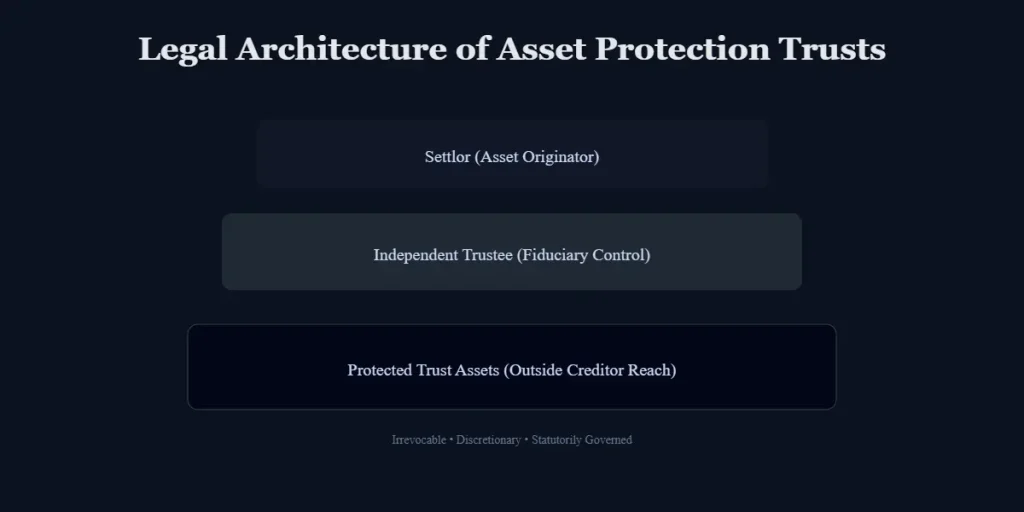
At its core, an Asset Protection Trust (APT) is an irrevocable arrangement where the settlor transfers assets to a third-party trustee. The defining feature is the “spendthrift” provision, which restricts a beneficiary’s ability to transfer their interest. This creates a legal barrier that prevents creditors from attaching trust assets to satisfy the settlor’s personal debts.
To withstand the scrutiny of the OECD or SEC, a valid APT must meet several technical benchmarks:
- Irrevocability: The settlor must relinquish the power to unilaterally dissolve the trust or reclaim assets.
- Discretionary Distributions: To prevent assets from being deemed “reachable,” the trustee must maintain independent, absolute discretion over all distributions.
- Independent Trusteeship: In jurisdictions like Canada or the EU, appointing a professional, non-related fiduciary is essential to avoid “alter ego” challenges that could nullify the trust’s protections.
Regional Context
The utility of an APT is dictated by the legal doctrines of the jurisdiction where the assets or the settlor reside.
- The United States: The rise of domestic asset protection trusts (DAPTs) has fundamentally changed the landscape. While common law historically barred “self-settled” trusts from creditor protection, 20 states have now passed statutes to the contrary.
- Canada: Governed by provincial Fraudulent Conveyances Acts, Canadian courts maintain a high threshold for “intent to defraud,” making trusts a popular defensive measure for professionals in high-value litigation zones, such as Ontario and British Columbia.
- The European Union: EU investors must align trust structures with the Anti-Tax Avoidance Directive (ATAD) and DAC6 disclosure rules. Trusts here are often used alongside foundations to ensure cross-border recognition and GDPR-aligned transparency.
- Australia & New Zealand: These regions balance protection against strict bankruptcy laws. Australia’s Bankruptcy Act 1966 allows for significant clawback periods, while New Zealand’s Trusts Act 2019 has increased fiduciary transparency to align with OECD standards.
Domestic vs. Offshore: Navigating Jurisdictional Strength
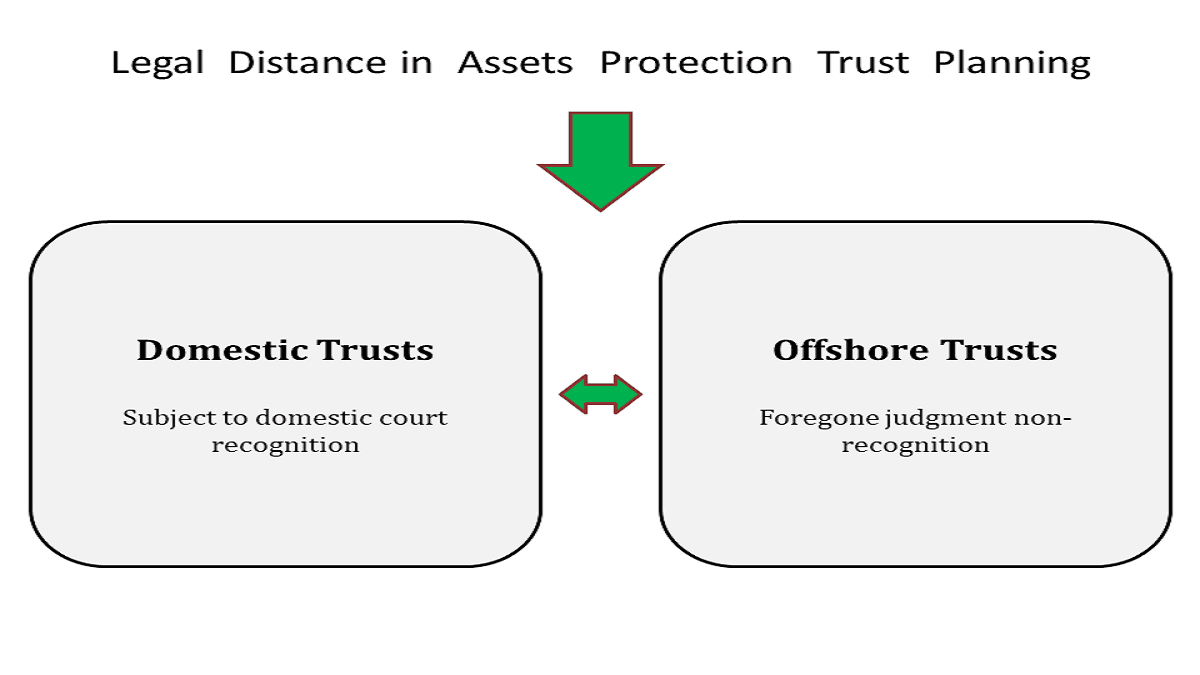
Selecting a trust jurisdiction is a strategic exercise in balancing statutory protection against global transparency requirements. This choice generally bifurcates into Domestic Asset Protection Trusts (DAPTs) and Offshore Asset Protection Trusts (OAPTs).
Domestic Asset Protection Trusts (DAPTs)
A DAPT is established under the laws of a specific state or province that has bypassed traditional prohibitions on self-settled trusts. While the settlor may remain a beneficiary, the assets are theoretically shielded from future creditors.
Case Study: Asset Protection Trusts California vs. Wyoming
The divergence in state legislation creates significant hurdles for US-based investors:
- Asset Protection Trusts Wyoming: Wyoming remains a premier jurisdiction, offering a shortened two-year statute of limitations on fraudulent transfers and robust “charging order” protection for LLCs held within the trust.
- Asset Protection Trusts California: California lacks a DAPT statute. A California resident utilizing a Wyoming trust faces “conflict of laws” risks, as California courts may apply local laws to reachable assets based on public policy or the Uniform Voidable Transactions Act (UVTA).
Offshore Asset Protection Trusts (OAPTs)
OAPTs, located in jurisdictions such as the Cook Islands or Nevis, provide the highest level of insulation by removing assets from the reach of domestic court orders. These jurisdictions typically do not recognize foreign judgments, forcing creditors to re-litigate claims locally—often under a “beyond a reasonable doubt” standard for fraudulent transfer.
Jurisdictional Comparison Framework (2026 Analysis)
How to read these ranges: For Asset Protection Trusts: A Comparative Analysis of Domestic and Offshore Frameworks in Developed Markets, these figures are illustrative planning ranges, not independently established market-wide averages or forecasts. Before applying the ranges in Asset Protection Trusts: A Comparative Analysis of Domestic and Offshore Frameworks in Developed Markets, check the observation date, scope and relevant fees or contract terms against the cited source.
| Jurisdiction | Primary Structure | Statutory Protection Level | Disclosure Standard (CRS/FATCA) | Key Legislative Focus |
| USA (Wyoming) | DAPT | High (Domestic) | High (FATCA) | 2-year statute of limitations; privacy. |
| Canada | Inter Vivos Trust | Moderate | High (CRS) | Fraudulent Conveyance provincial laws. |
| EU (Luxembourg) | Private Wealth Co/Trust | High (Compliance) | Very High (DAC6) | AML and tax transparency mandates. |
| Australia | Discretionary trust | Depends on facts and law | CRS reporting may apply | Voidable-transaction and insolvency rules are fact-specific; seek local advice |
| New Zealand | Domestic Trust | Moderate/High | High (CRS) | Fiduciary duties via Trusts Act 2019. |
Real-World Strategic Applications
- US Medical Professionals: A surgeon in California, facing potential claims exceeding insurance limits, may establish a Wyoming DAPT. While providing settlement leverage, the timing must precede any specific claim to avoid “voidable transaction” rulings.
- EU Tech Entrepreneurs: A founder in Dublin preparing for an exit may utilize a Luxembourg structure. Under the Anti-Tax Avoidance Directive (ATAD), the structure is transparent but offers a robust legal shell against future commercial litigation.
- Australian developers should not assume that a discretionary trust automatically ring-fences family assets. Australian insolvency law contains different rules for voidable transactions and transfers, and the relevant period depends on the transaction, solvency evidence and statutory provision. Obtain Australian insolvency and trust advice before relying on a structure. Australian Bankruptcy Act 1966.
Risk Factors and Regulatory Scrutiny
In the 2026 fiscal environment, “set and forget” wealth preservation is obsolete. The efficacy of an asset protection trust apts strategy is contingent upon navigating three primary risks:
- Voidable Transactions: Across the US, Canada, EU, and Australia, transfers intended to “hinder, delay, or defraud” creditors can be set aside. The “look-back” period is the most critical variable in any audit.
- The “Sham” Doctrine: If a settlor retains excessive control—acting as a de facto sole decision-maker—courts may deem the trust an alter ego, piercing the protective shell and making assets reachable.
- The US Corporate Transparency Act (CTA): Trustees must now report Beneficial Ownership Information (BOI) to FinCEN for entities held within trusts, eliminating the veil of anonymity that once characterized domestic structures.
Similarly, the EU’s 6th Anti-Money Laundering Directive (AMLD6) and Canada’s Enhanced T3 Reporting (effective for the 2025/2026 tax years) have transformed trusts into highly transparent vehicles.
Strategic Alignment: Eligibility Criteria
- Who Should Consider: High-liability professionals, corporate directors, pre-exit entrepreneurs, and real estate developers with long-term solvency horizons.
- Who Should Avoid: Individuals with active or “threatened” litigation, those whose credit facilities require personal asset inclusion, or those unwilling to cede control to an independent trustee.
Investment & Legal Disclaimer
This publication is for informational purposes only and does not constitute legal or tax advice. Asset protection involves complex multi-jurisdictional laws. Readers must consult with qualified counsel in their specific jurisdiction. No protection is guaranteed, and all trust arrangements remain subject to evolving regulatory mandates and judicial scrutiny.
Conclusion: The Future of Capital Preservation
Asset Protection Trusts remain the most formidable tool for capital insulation, but their value has shifted from “secrecy” to settlement leverage. In 2026, the most effective APT is one that is fully compliant and transparent to regulators while remaining legally distant from the settlor. As global transparency increases, the “Offshore vs. Domestic” debate is evolving toward a hybrid model—utilizing the statutory convenience of jurisdictions like Wyoming or Luxembourg for operations, while maintaining an offshore contingency for extreme systemic risk.
Due diligence before choosing a trust structure
Compare structures by the law that governs the trust, the location and type of assets, the settlor's tax residence, beneficiary residence, reporting obligations, creditor rules and the practical ability to administer the arrangement. Ask independent legal and tax advisers to identify conflicts between jurisdictions before transferring assets. A structure should have a legitimate estate-planning or risk-management purpose and must not be used to conceal beneficial ownership, evade tax or defeat existing creditor claims.
For internationally mobile families, map reporting and disclosure duties in every relevant country, including where the trust is managed and where beneficiaries live. Record the reasons for the structure, source of funds, trustee powers and succession plan, then review them after a move, marriage, inheritance or material law change.
Frequently asked questions
Does an offshore trust automatically reduce tax?
No. Tax treatment depends on the facts and the laws of the jurisdictions involved. A trust may create additional filings or tax exposure, so obtain tailored advice before implementation.
When should a trust structure be reviewed?
Review it after a change in tax residence, family circumstances, asset ownership, trustee arrangements or relevant law, and periodically with qualified advisers.
Jurisdiction, rights and reporting checks
A trust’s label or location does not by itself protect assets. The meaningful questions concern who retains control, whether transfers can be challenged, how local courts recognise the arrangement, and what tax, reporting and succession duties apply to the people involved.
Related Resources

International Banking
Offshore Banking Compliance 2026: Strategy Guide
Navigate international banking rules with our Offshore Banking Compliance 2026 strategy guide for institutional and high-net-worth investors.

Wealth Management
Cross-Border Wealth Structuring
Master cross-border wealth structuring for international assets. Explore jurisdiction selection, multi-jurisdictional estate planning, and tax efficiency.

Financial Protection
Sovereign Asset Seizure Risks
Analyze sovereign asset seizure risks, state immunity doctrines, and cross-border reserve protection frameworks for international investors.
The information provided is for educational and informational purposes only and does not constitute financial, investment, tax, or legal advice.