
Calculate your ideal emergency fund goal in seconds with our Emergency Fund Calculator. Ensure your financial safety net with our free tool. Start planning now!

Emergency Fund Calculator
Total Goal: $0
Progress: 0%

What is an Emergency Fund?
An emergency fund definition is your financial defense system—a dedicated reserve of liquid cash set aside specifically to handle unforeseen life events. At Global Investment Reviews, we advocate that a robust emergency fund should cover at least 3 to 6 months of essential living expenses. This pool of money provides the stability required to navigate sudden job loss or medical needs without accumulating high-interest debt.
Financial Theory and Liquidity Buffer
From a theoretical standpoint, an emergency fund represents a "liquidity buffer." It is calculated as:
This formula ensures that your financial base is shielded against market volatility. Global Investment Reviews suggests maintaining this balance in a high-yield savings account to balance accessibility with modest growth.
In what way is your emergency fund a form of insurance?
Think of your emergency fund as "self-insurance." Much like a traditional policy, this fund activates during a crisis. Real Example: If you face an unexpected $3,000 car repair, having this fund prevents you from borrowing on credit cards at 20%+ APR. By self-insuring, you protect your long-term wealth strategy from being derailed by short-term shocks.
Before You Spend: Three Critical Questions
What are three questions to ask yourself before you spend your emergency fund? To maintain your financial integrity, pause and evaluate:
- Is this truly an unexpected emergency?
- Can I cover this expense through my regular monthly budget?
- Will this withdrawal significantly impact my long-term goals?
Purpose of Financial Discipline
What's the purpose of the three questions you should ask before using your emergency fund? The primary goal is preserving your financial resilience. By pausing to reflect, you ensure the safety net you have built at Global Investment Reviews remains intact, allowing you to stay focused on your wealth creation strategies even when minor bumps occur.
A practical note on Emergency Fund
The question worth answering: This page is most useful when you focus on sizing cash reserves around essential spending volatility. Estimating a reserve for someone whose income varies by season or contract. Start by recording the input source, the date or period covered, and any assumption you had to supply yourself. That makes the result easier to reproduce and helps another person understand what the output actually says.
How to use the result responsibly
Read the output alongside the inputs rather than as a stand-alone verdict. Change one assumption at a time and observe whether the conclusion changes materially. If the tool accepts a range, test more than one plausible case; if it accepts a file or pasted data, preserve an untouched copy of the original. Where the result will support a published claim or an important decision, keep a brief record of the method and source date.
A mistake specific to this kind of task
Using total spending rather than essential spending may overstate the target, while ignoring dependants or unstable income may understate it. This is why the output should be described as an estimate, diagnostic or comparison where appropriate—not as a guarantee. Avoid mixing currencies, periods, definitions or data sources merely because their labels look similar.
Independent check before acting
Build the monthly base from housing, food, utilities, transport, insurance and minimum debt payments; revisit it after a job or household change. If the result conflicts with a statement, official record, provider terms or the original dataset, investigate the difference before relying on it. The tool is intended to make a task clearer, not to replace the source system or professional advice when the consequences are material.
Reader takeaway: Keep the assumptions visible, verify the underlying evidence and use this result as one part of a reasoned decision.
Related Resources
Savings Goal Calculator
Use this free savings goal calculator to estimate the monthly amount needed to reach a target, including current savings and an assumed annual return. Adjust the timeline and rate to compare scenarios.
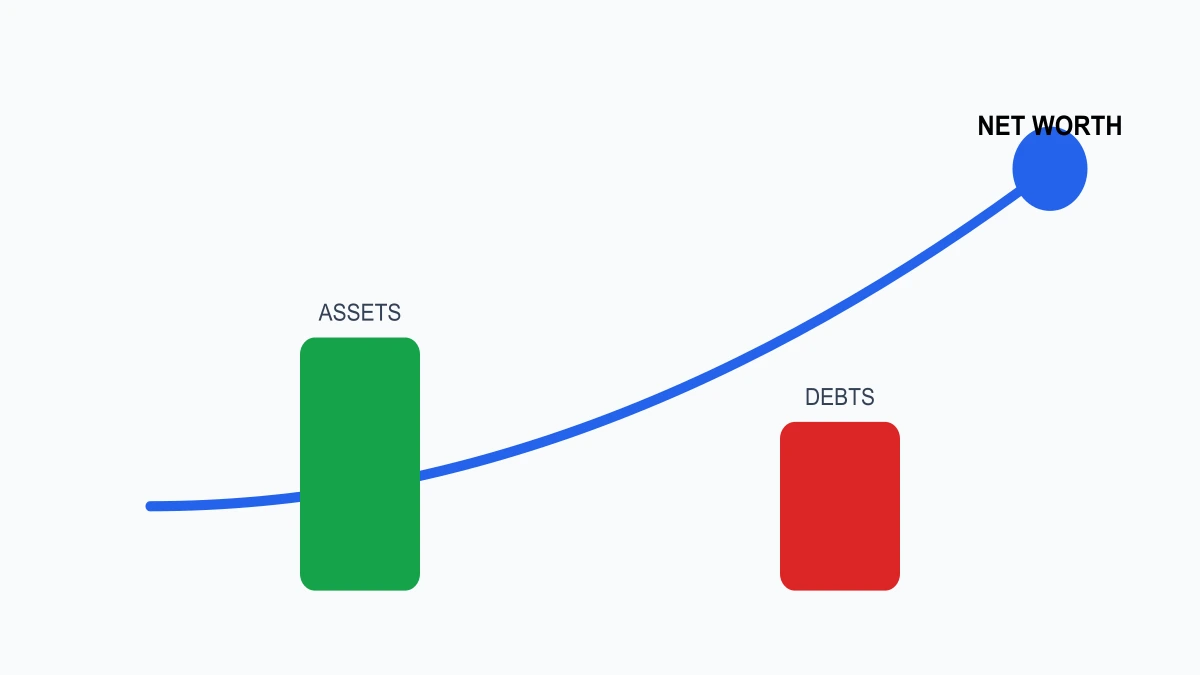
Net Worth Calculator
Track your total assets and liabilities with our advanced Net Worth Calculator. Calculate your debt-to-asset ratio and monitor your financial growth today.

Education Savings Calculator
Fund your child's degree with ease! Use our advanced Education Savings Calculator to project growth and secure a debt-free future. Start planning with GIR today!